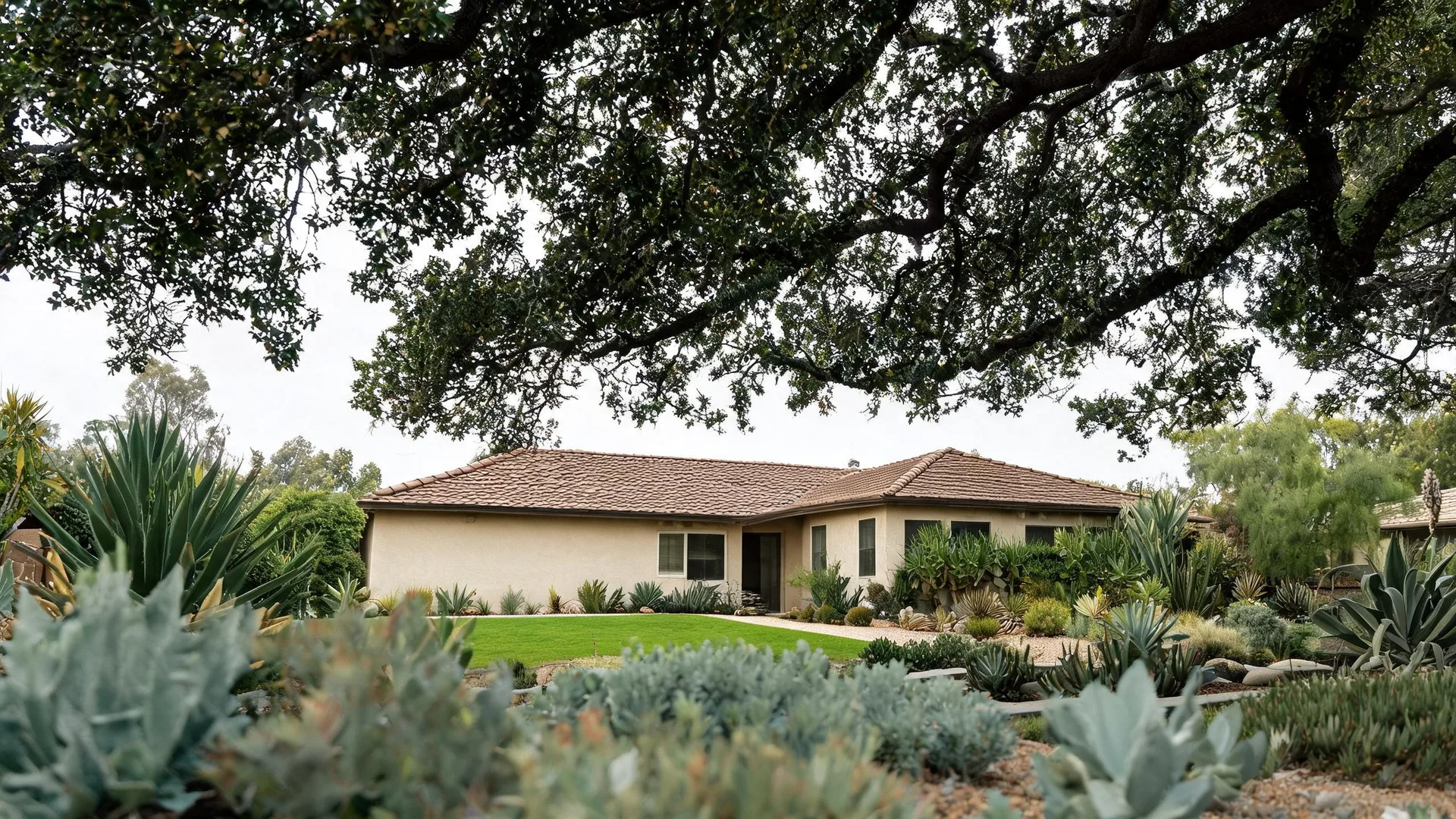





A single-story stucco house with a tile roof sits behind a lawn and drought-tolerant garden of agaves and succulents, framed by overhanging oak branches under an overcast sky.

AC Maintenance in Los Angeles, CA

Tell us about the job

Takes about a minute. No obligation.

Tune-up, service, or cleaningCentral ACLos Angeles County, CA
Step 1 of 2

What ZIP code is the job in?

Electricity here runs 29.69 cents per kilowatt-hour on average, among the highest rates in the country. A dirty coil or a weak capacitor makes the compressor work harder to do the same job, and that extra work shows up on the meter. In most places that waste gets buried in a cheap rate. Here it doesn't. A system that's drifted out of tune still cools the house, so nothing feels wrong, but it's pulling more power to get there. At these rates, that difference is worth catching.

4 months
June through September, your air conditioner is on duty
87°F
the average summer afternoon it cools against
9 hail events
in ten years, and hail bends the fins on outdoor coils
112 wind events
in ten years, and wind drives debris into outdoor units
Isometric cutaway illustration of a house with a dark shingled roof, showing interior ductwork connected to an indoor air handler and an outdoor condenser unit beside the building.
Your air conditioner works hardest from June through September.

NOAA nClimDiv, 1991–2020 normals

Half the homes in Los Angeles County were built in 1965 or earlier.

A system that's been in the house that long has had decades to drift out of tune, and a yearly check is how you catch it before it shows up on the bill.

June is when it starts working. May is when to check it.

Cooling runs June through September
Climate zone 3B
Power here costs 29.69 cents per kilowatt-hour

A thermostat reading only tells you the air got cold, not what it took to get there. A compressor can be short cycling, a blower wheel can be caked down to half its width, and the house still feels fine from the couch. Some of what a tune-up finds isn't even failing yet. Refrigerant lines get checked for oil residue, which points to a slow leak long before the charge drops low enough to hurt cooling. Fan blades get checked for wobble, because a blade spinning slightly out of true wears its own bearing down faster than it should. None of that announces itself. It just shortens how long the system lasts, quietly, until the day it doesn't start.

A system left alone costs more to run here

A tune-up catches the dirty coil or the weak capacitor before it spends a summer running up the meter. Getting it checked costs nothing compared to what it quietly adds to the bill.

Find a contractor
An outdoor air conditioning condenser unit mounted on a concrete pad beside a house, with electrical conduit running to a wall-mounted disconnect box.

What a technician actually checks

A real tune-up starts with the technician cutting power at the disconnect before anything else happens. Then the coil gets pulled apart from the condenser fins to check for buildup, not just a glance through the grille. Refrigerant charge gets checked with gauges against the system's actual target, not topped off by feel. The capacitor gets tested under load, since a capacitor can measure fine sitting still and still fail once the compressor draws on it. The contactor points get checked for pitting, the blower wheel gets inspected for caked dust, and the drain line gets cleared so condensate has somewhere to go. A quick visit skips most of this. Someone shows up, glances at the unit, hoses off the outside of the coil, and calls it done. Ask what gets tested and what gets left alone. If nobody mentions the capacitor, the charge, or pulling the coil apart, they didn't do the job.

The filter is doing more than you think

A clogged filter starves the system of airflow. The coil behind it can't shed heat properly, so the compressor runs longer to reach the same temperature on the thermostat. Airflow problems show up as ice on the refrigerant line, a coil that sweats more than it should, or a system that runs most of the day without catching up. Changing the filter is the one part of this an owner can do without tools.

The drain line fails quietly

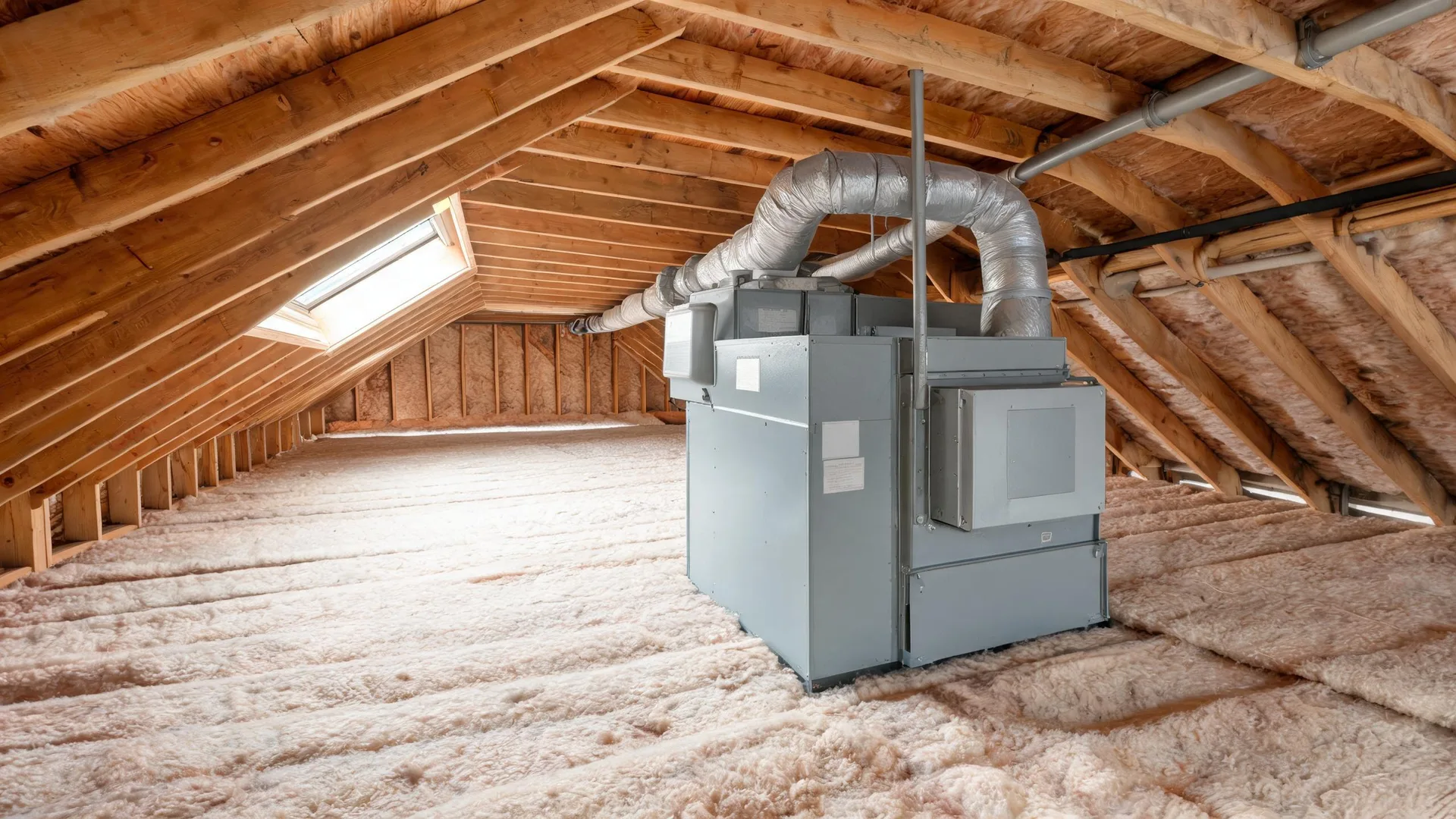
Condensate has to go somewhere, and the drain line is how it leaves the house. Algae and dust build up inside that line over time and narrow it until water backs up. A clogged drain doesn't make noise or change how the air feels. It shows up as a pan full of water, a shut-off switch tripping for no clear reason, or water stains near the indoor unit. Clearing that line before it clogs is cheaper than drying out what it damages after.

Overhead view of an outdoor AC condenser unit on a concrete pad next to a house with a dark shingle roof.

Book your AC tune-up in May, before homes here start needing cooling in June.

  1. Jan
  2. Feb
  3. Mar
  4. Apr
  5. May
  6. Jun
  7. Jul
  8. Aug
  9. Sep
  10. Oct
  11. Nov
  12. Dec

A tune-up checks the refrigerant charge, cleans the coils, tests the capacitor and tightens the electrical connections.

A tune-up is the only time most of this system gets looked at directly instead of through a thermostat reading. The technician checks refrigerant charge against the system's target, not by feel, because both too little and too much make the compressor work harder than it should. Electrical connections get checked for looseness and corrosion, since a loose connection builds heat and that heat damages whatever it touches. The blower motor and fan get checked for wear, because a motor straining to turn pulls more current to do the same job. Safety controls get tested too, the switches that shut the system down before a clogged drain or a frozen coil turns into real damage. None of this shows up by looking at the unit from across the yard.