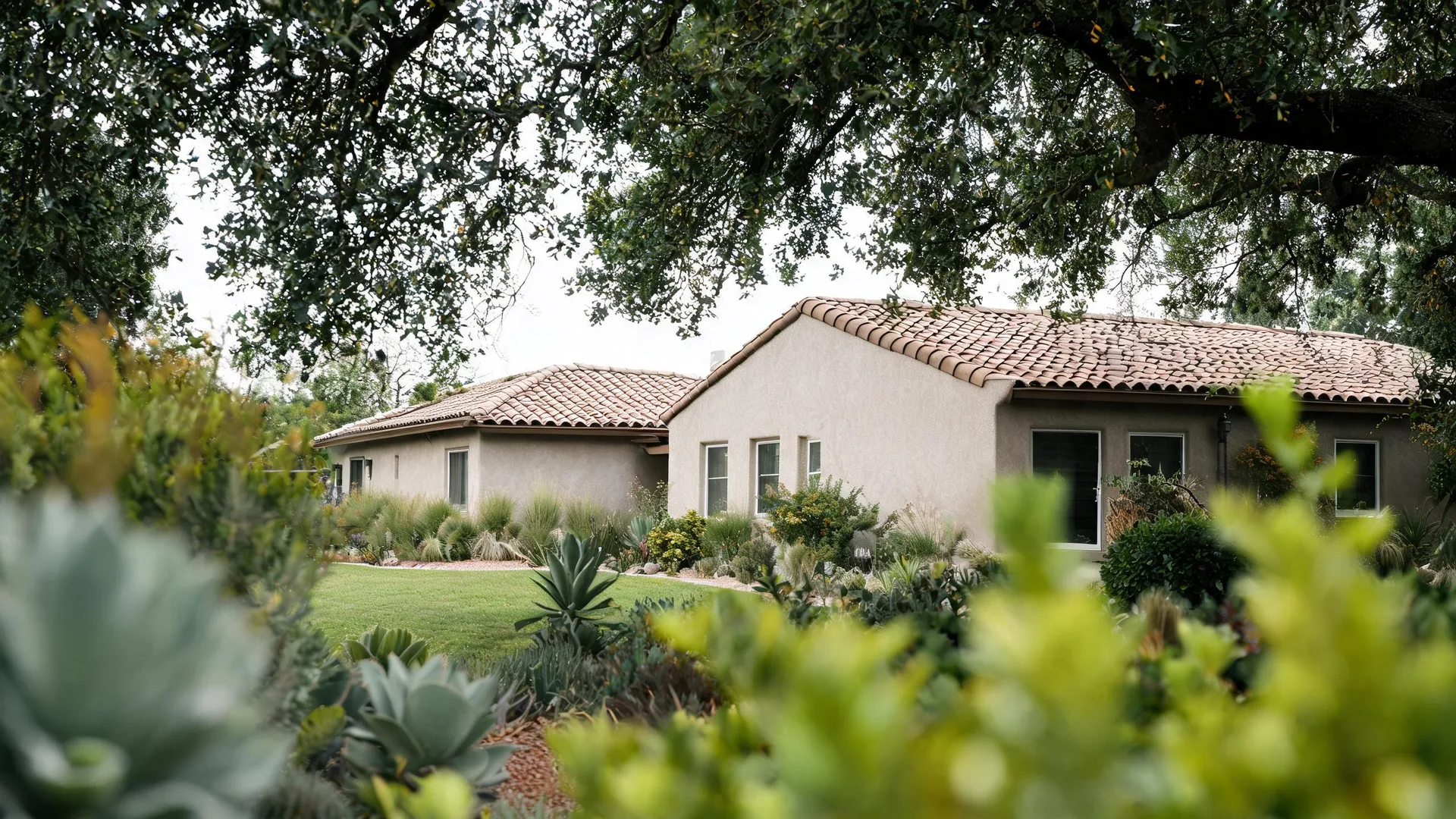




A single-story stucco house with a clay tile roof, framed by overhanging oak branches and foreground agave and shrub plantings beside a lawn.

AC Maintenance in Modesto, CA

Tell us about the job

Takes about a minute. No obligation.

Tune-up, service, or cleaningCentral ACStanislaus County, CA
Step 1 of 2

What ZIP code is the job in?

Electricity in California ran 31.97 cents per kilowatthour in 2024, well above what most of the country pays. That number matters more once an air conditioner starts working harder than it should. A dirty coil or a low charge makes the compressor run longer to cool the same house, and every extra minute shows up on the bill at that rate. Modesto summers keep the system running for months, so the gap between a unit working clean and one working dirty adds up fast. None of that shows up as a breakdown. It just shows up as a higher bill every month the system runs.

5 months
May through September, your air conditioner is on duty
91°F
the average summer afternoon it cools against
1 hail events
in ten years, and hail bends the fins on outdoor coils
18 wind events
in ten years, and wind drives debris into outdoor units
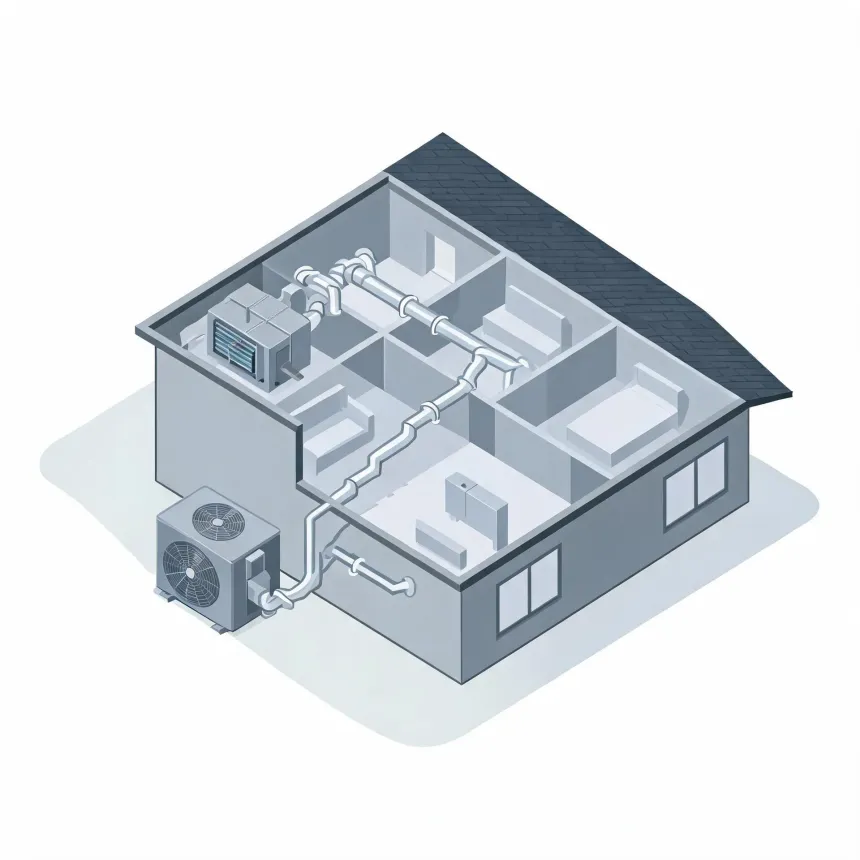
Isometric grey illustration of a cutaway single-story house showing interior rooms, ceiling ductwork connected to an indoor air handler, and an outdoor condenser unit linked by lines outside the wall.
Your air conditioner works hardest from June through September.

NOAA nClimDiv, 1991–2020 normals

Half the homes in Stanislaus County were built in 1981 or later.

A system that age still has a lot of working life left for a yearly check to protect.

May is the first month of cooling here. Get the check done in April.

Cooling runs May through September
Summer afternoons average 91°F
Power costs 31.97 cents a kWh statewide

A technician opens the panel and checks things a homeowner never sees from the thermostat. The refrigerant charge either matches what the system calls for or it doesn't, and a few pounds low won't show up as anything except a house that takes longer to cool. The contactor points get checked before they burn through and leave the compressor dead on the first hot day. The capacitor gets tested under load, because a weak one still starts the system most mornings right up until it doesn't. The coil gets looked at for the kind of buildup that cuts airflow slowly enough that nobody notices the change from one week to the next. None of this is visible from inside the house. It only shows up when someone opens the unit and checks it against what it's supposed to read.

A clean system costs less to run at that rate

The rate itself won't change. What it costs to run this AC each month depends on whether the coil is clean and the charge is right. A tune-up now checks both before the compressor has to work harder on a hot day.

Find a contractor
An outdoor residential air conditioning condenser unit mounted on a concrete pad, surrounded by gravel with a blue sky in the background.

What a tune-up actually checks

A quick visit gets you a filter swap, a glance at the thermostat and a reading off the gauges. A thorough one puts a meter on the capacitor instead of just looking at it, since a capacitor can test weak under load and still start the system that same morning. It means pulling the panel and checking the contactor points for pitting, not just listening for the hum. It means measuring airflow across the coil, not just eyeballing it for dirt. The refrigerant charge gets checked against what the system is rated for, not topped off by guess. Anyone can open a unit and have it running again in a few minutes. Whether it is still running clean on the hottest day of the year is the difference.

The filter protects the coil

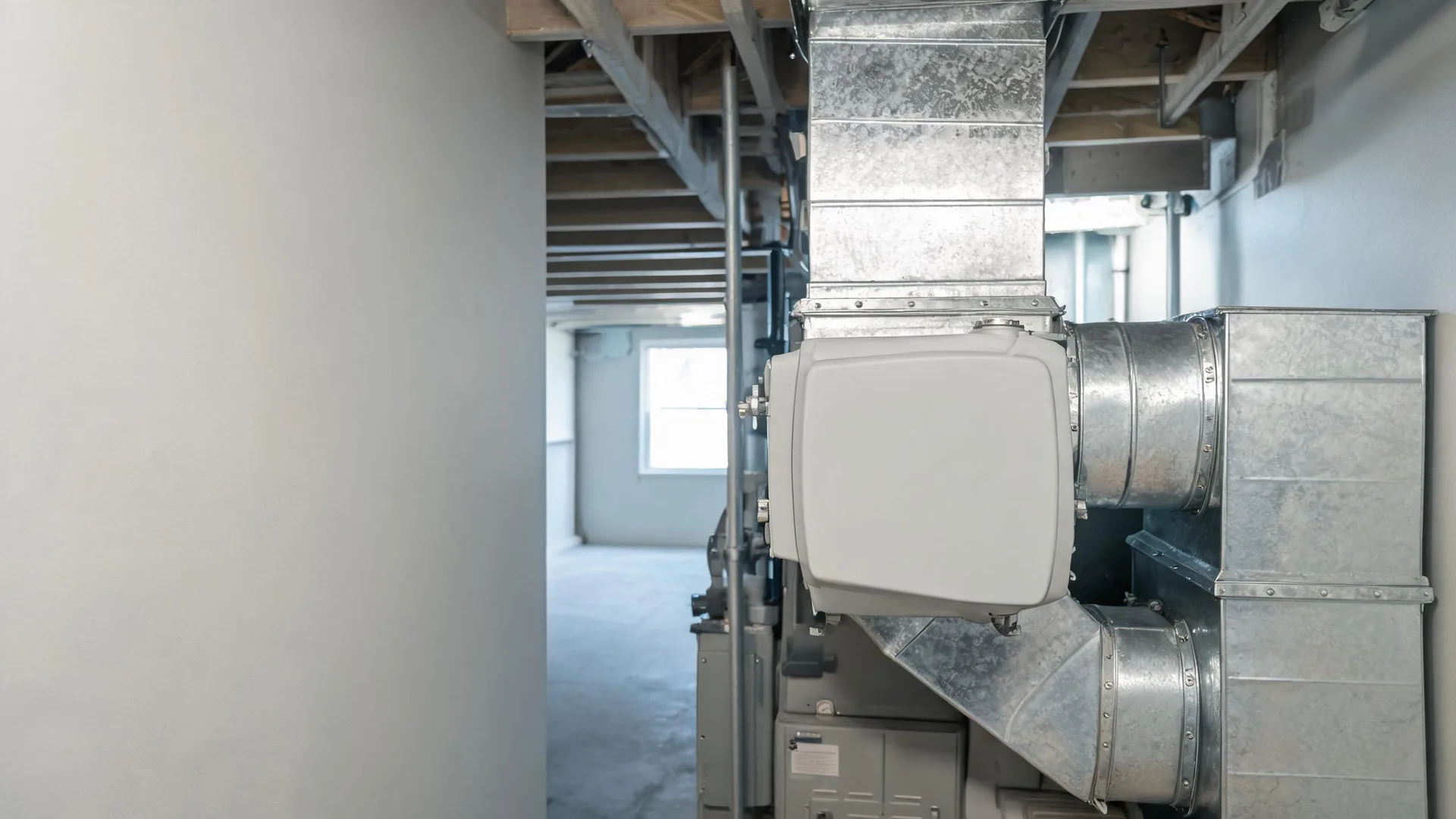
A dirty filter starves the system of airflow, and the indoor coil needs that airflow moving across it to pull heat out of the house. Starve it long enough and the coil can frost over even on a hot day. Once that ice builds up, the system is cooling the air even less, not more.

A clogged drain backs up into the house

The indoor coil sheds water as it works, and that water is supposed to run out through a drain line to the outside. Algae and dirt build up inside that line over time and narrow it until it stops draining. When it backs up, the water has nowhere to go but into the pan under the coil, and from there into the ceiling or the closet the unit sits in.

Aerial view of a square outdoor air conditioning condenser unit on a concrete pad beside a house wall with a sliding glass door.

Book your AC tune-up in April, before homes here start needing cooling in May.

  1. Jan
  2. Feb
  3. Mar
  4. Apr
  5. May
  6. Jun
  7. Jul
  8. Aug
  9. Sep
  10. Oct
  11. Nov
  12. Dec

A tune-up checks the refrigerant charge, cleans the coils, tests the capacitor and tightens the electrical connections.

A tune-up also covers things that don't show up on a gauge. The condenser fan motor gets checked for play in the bearing, because a motor that wobbles on its shaft now is a motor that seizes later. The disconnect box gets opened and the wiring inside gets checked for scorch marks, since a loose connection heats up before it fails outright. The blower wheel gets looked at too, not just the coil, because a wheel caked with dust moves less air no matter how clean the coil is behind it. A tech also checks that the outdoor unit has clearance on all sides, since a fence or a shrub grown in too close chokes off the airflow the condenser needs to shed heat. None of this fails all at once. It wears down slowly, and a yearly check catches it while the system is still running the way it should.