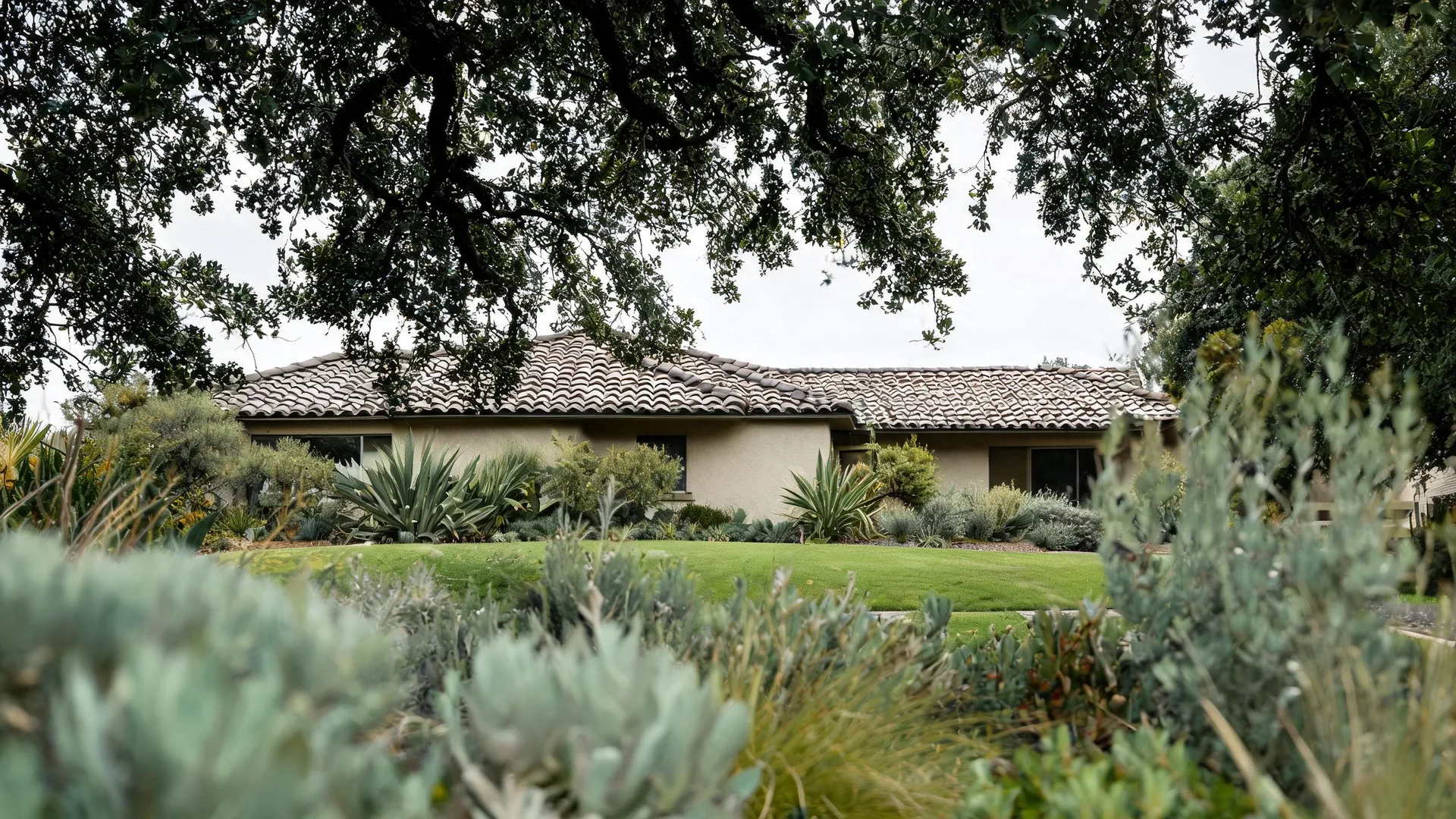






A single-story stucco house with a clay tile roof sits behind a lawn and drought-tolerant plantings including agaves, framed by overhanging oak branches and blurred silvery shrubs in the foreground under an overcast sky.

AC Maintenance in Oakland, CA

Tell us about the job

Takes about a minute. No obligation.

Tune-up, service, or cleaningCentral ACAlameda County, CA
Step 1 of 2

What ZIP code is the job in?

Electricity in Alameda County averaged 37.80 cents per kilowatt-hour in 2025, among the highest rates in the country. A dirty coil or a low charge makes the unit draw more power to do the same job, and every one of those watts here costs more than it would almost anywhere else. The air stays easy most of the summer, dew points averaging only 50°F, so the unit here is not fighting heavy air the way it would elsewhere. What it's fighting is its own neglect. A unit that has to work harder because of a clogged filter or a weak capacitor runs up a bill fast at Oakland's rates, even on a system that barely runs half the year.

3 months
July through September, your air conditioner is on duty
82°F
the average summer afternoon it cools against
19 hail events
in ten years, and hail bends the fins on outdoor coils
166 wind events
in ten years, and wind drives debris into outdoor units
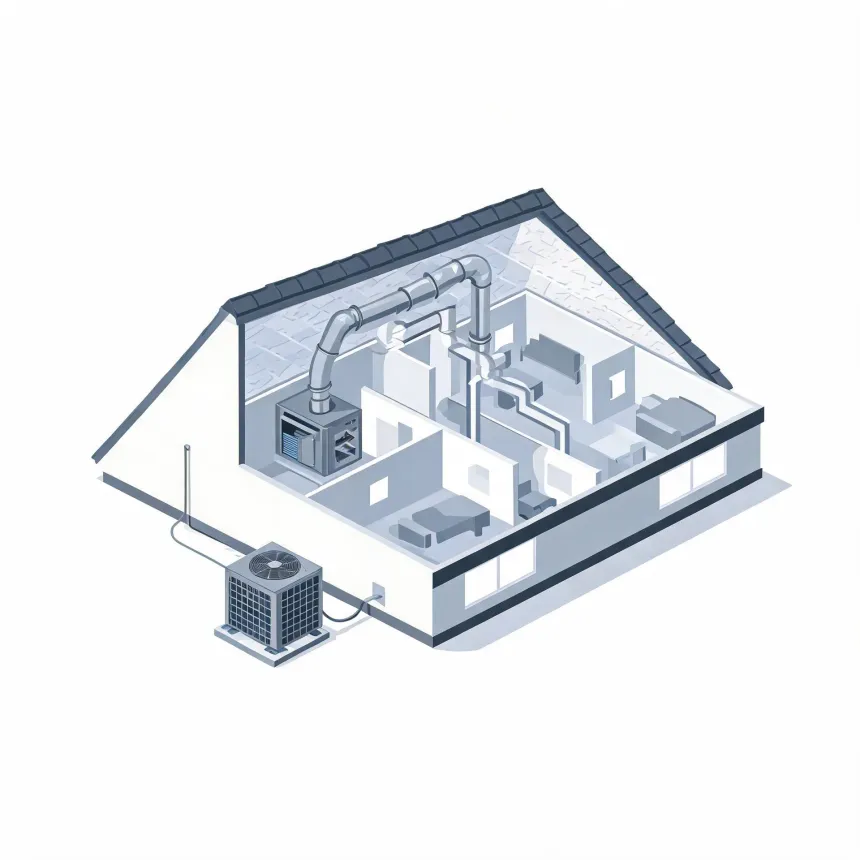
Isometric illustration of a cutaway house showing interior rooms, an attic furnace with large ducts, and an outdoor condenser unit connected by a line set, on a white background.
Your air conditioner works hardest from July through September.

NOAA nClimDiv, 1991–2020 normals

A dirty filter chokes airflow across the coil, and the system still has to move the same amount of heat.

That extra strain shows up as higher power draw, not as a part that visibly breaks.

Half the homes here were built by 1969, and so was the system behind the wall

Half the homes here were built by 1969
Climate zone 3C
Power here costs 37.80 cents per kilowatt-hour
July starts it coldCooling in Alameda County starts in July. Book the tune-up in June.

If your AC has been there since before a remodel, or came with the house when you bought it, a yearly check is how a technician finds the weak capacitor or the low charge before it causes a breakdown. On an older system, parts have had more years of run time to wear down, and a tune-up is when someone actually looks at them instead of waiting for the unit to quit. It also means someone is checking the specific things that drive up a power bill at Oakland's rates, like a dirty coil or a filter that's restricting airflow. You don't need to know how old your unit is to have it checked. You just need someone to open the cabinet and look.

A tune-up is what keeps that power draw down

A technician cleans the coil, checks the charge, and clears whatever is making the unit work harder than it needs to. At Oakland's rates, that's what a tune-up is for.

Find a contractor
A man in a cap, gray t-shirt and brown work pants climbs porch steps toward an orange front door, carrying a canvas and leather tool bag.
A gray cylindrical air conditioning condenser unit mounted on a concrete pad next to a light-colored vinyl-sided house exterior.

What's wrong doesn't always show

Refrigerant charge is the one that catches people off guard. Too low and the system can still blow cold air out of the vent while it struggles to pull heat out of the house, running longer than it should and wearing on the compressor the whole time. You won't hear it. You won't see it. A gauge set on the service ports is what finds it. Same with a capacitor that's weakening but hasn't failed yet. The fan still spins, the compressor still kicks on, but it's drawing harder to do it, and that part fails all at once, usually on the hottest day it has to work. A tune-up puts hands and gauges on the things a homeowner has no way to check from the thermostat.

A gauge set tells you, a glance doesn't

Anyone can pull the panel off and look for dirt or a frayed wire. Checking the refrigerant charge means hooking up gauges to the service ports and reading actual pressures against what the system is supposed to run. Checking capacitor strength means testing it with a meter, not just seeing that the fan spins. A quick visit covers what's visible. A thorough one measures what isn't.

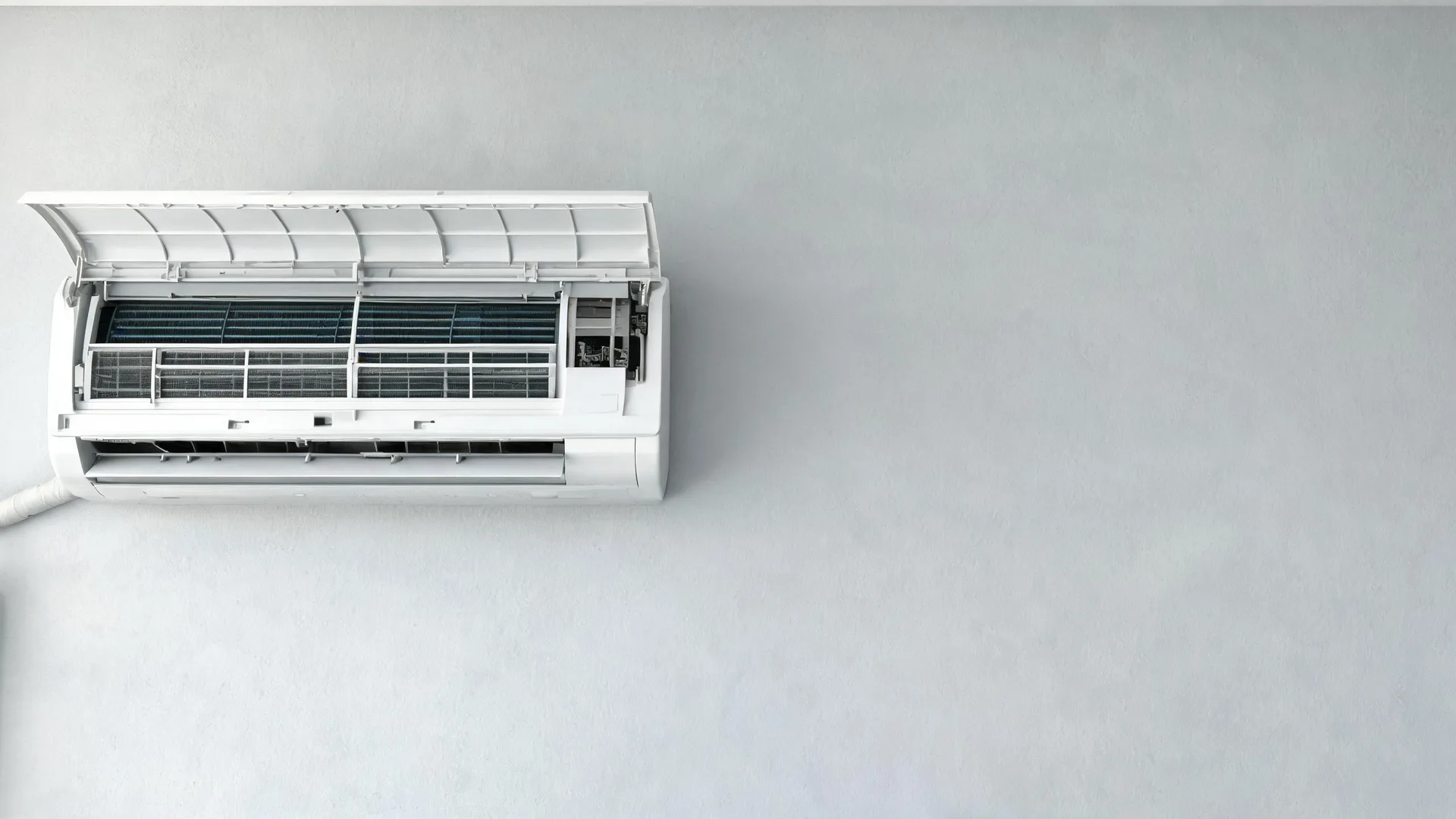
The coil has to come apart to get clean

Dust and grime settle between the fins of the evaporator and condenser coils, and a vacuum from the outside only gets the surface. A real cleaning means pulling the blower access or the top panel and washing the coil where the airflow actually passes through it. Skip that step and the unit keeps the extra strain that caused the dirty coil in the first place, no matter how good the cabinet looks when it's closed back up.

Aerial view of a gray outdoor air conditioning condenser unit mounted on a concrete pad next to a house with vinyl siding.

Book your AC tune-up in June, before homes here start needing cooling in July.

  1. Jan
  2. Feb
  3. Mar
  4. Apr
  5. May
  6. Jun
  7. Jul
  8. Aug
  9. Sep
  10. Oct
  11. Nov
  12. Dec

A tune-up checks the refrigerant charge, cleans the coils, tests the capacitor and tightens the electrical connections.

A proper tune-up starts outside at the condenser. The technician checks that the fan spins freely, that the coil fins aren't bent flat against airflow, and that nothing is blocking the cabinet. Inside, the evaporator coil gets inspected and the drain line gets checked, since a clogged line backs up water into the house instead of out. The refrigerant charge gets measured against what the manufacturer specifies, not guessed at. Electrical connections get tightened, because a loose connection generates heat and that heat degrades the part it's touching. The contactor and capacitor get tested under load, not just looked at. None of this takes apart the system. It puts it back exactly as it was, just with every part confirmed to be doing what it's supposed to do.