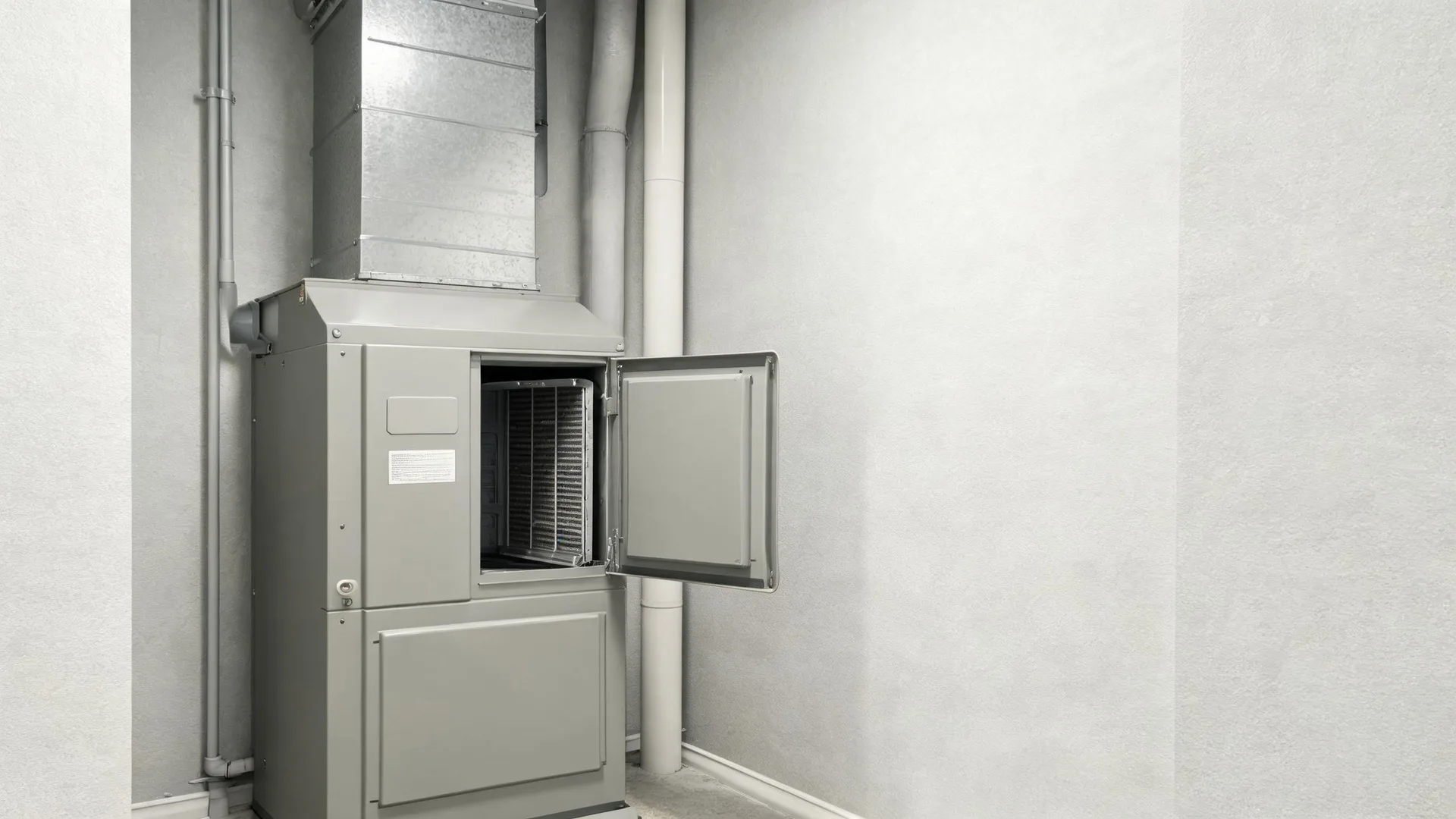
A dirty system draws more power
A coil caked with dust or a filter clogged with debris makes your AC work harder to move the same amount of cool air. That extra draw shows up on the meter, every hour the system runs.

Takes about a minute. No obligation.
A coil caked with dust or a filter clogged with debris makes your AC work harder to move the same amount of cool air. That extra draw shows up on the meter, every hour the system runs.
California households paid 31.97 cents per kilowatthour in 2024, among the highest rates in the country. A system running inefficiently here costs more to ignore than it would almost anywhere else.

NOAA nClimDiv, 1991–2020 normals
Half the homes in Riverside County were built in 1990 or later.
A system installed with a newer home still has years of service ahead, and a yearly check is what keeps it running through all of them.




A yearly check on a newer system is mostly about keeping it that way. The technician cleans the coil, checks the refrigerant charge, and makes sure the capacitor and contactor are holding up before they fail outright. None of that fixes a problem, because there isn't one yet. It's what keeps a system installed a few years ago from turning into one that needs a repair call mid-summer, when Riverside asks the most of it. For a system with years ahead of it, that yearly visit is the cheapest year it will have.
A coil full of dust or a clogged filter makes the system draw more power to do the same job, and California's electric rates are among the highest in the country. A yearly check catches that before it shows up on the meter.
Find a contractor
A quick visit and a thorough one can look the same from the driveway. A truck shows up, someone's at the unit for a while, they leave. What tells them apart is what got measured against what. Checking refrigerant pressure tells you less than checking it against the charge that system is built to run. Looking at a capacitor tells you less than testing it under load, since a weak one can read fine sitting still and fail the moment the compressor asks something of it. A coil that looks clean from a glance can still be packed with fine debris between the fins, the kind that only shows up once someone runs a brush or a rinse through it. The honest version of this job takes the cover off, tests under load, and checks readings against the numbers that system calls for. The fast version checks that it's running and leaves it there.
The capacitor gives the compressor and fan motor the jolt they need to start. It weakens slowly, with no sign from inside the house, until the day it can't deliver that jolt anymore and the system just doesn't start. A yearly check catches a weak one on a meter reading, before it picks the day it fails.
When the outdoor coil is caked with dirt, the system can't shed heat the way it's built to, so it runs longer to reach the same temperature. Nothing shuts off or throws a code. It just quietly loses the capacity it had, and a yearly cleaning is what gets that capacity back.
A tune-up checks the refrigerant charge, cleans the coils, tests the capacitor and tightens the electrical connections.
A tune-up covers the same ground every time, whether the system is struggling or running fine. The technician checks refrigerant charge against what the system calls for, because too little or too much both make it work harder than it should. The capacitor gets tested under load, not just looked at, since a weak one can still show voltage and fail anyway. The condenser coil gets cleaned so it can shed heat the way it's designed to. Electrical connections get checked for corrosion or a loose lug, either of which can take out a contactor over time. The blower and filter get looked at too, since a system can be perfect outside and still struggle if the air isn't moving through it.