





White stucco houses with red tile roofs lit from within, nestled on a hillside at dusk beneath a deep blue sky.

AC Maintenance in San Mateo, CA

Tell us about the job

Takes about a minute. No obligation.

Tune-up, service, or cleaningCentral ACSan Mateo County, CA
Step 1 of 2

What ZIP code is the job in?

San Mateo County logged 282 severe weather events between 2015 and 2024, and damaging wind caused most of them, 266 times in that span. An outdoor AC unit sits outside through all of it. Wind drives debris into the coil and the fan. Hail hit the county 9 times over those same years, so it isn't the main risk here, but it happens. Once a storm passes, the unit can look fine from a few feet away and still have a bent fin or a leaf jammed against the coil, wearing it down a little more every time it runs.

73°F
the average summer afternoon it cools against
9 hail events
in ten years, and hail bends the fins on outdoor coils
266 wind events
in ten years, and wind drives debris into outdoor units
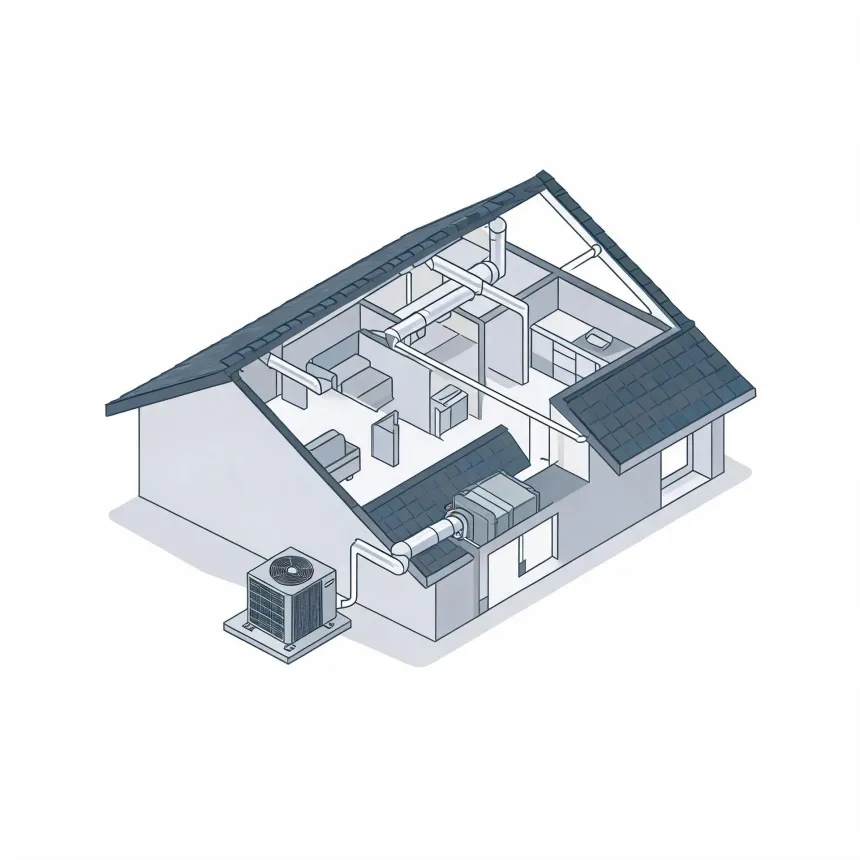
Isometric line illustration of a cutaway single-story house showing interior rooms, ceiling ductwork and an air handler, connected to an outdoor condenser unit on a pad beside the building.
Your air conditioner works hardest from July through September.

NOAA nClimDiv, 1991–2020 normals

Electricity in San Mateo County runs 38.23 cents per kilowatt-hour, among the highest rates in the country.

A unit that has to work harder to cool burns through those cents fast, even on a mild day.

Half the homes here are old enough that a yearly check is how you catch trouble early

Half the homes here were built by 1966
Climate zone 3C
Power here costs 38.23 cents per kilowatt-hour
Easy duty here, but not no dutyAfternoon highs average 73°F in summer, so this unit barely has to work, which is exactly why a yearly check matters more than the load does

If your AC came with a house built in 1966 or earlier, it's worth having someone look at it every year rather than waiting for it to act up. A yearly check gets a technician in front of the unit before a worn part turns into a breakdown on the first hot week. They can check the refrigerant charge, test the electrical connections, and see how the coil is holding up after decades of use. An older system can still run fine for years, but it has had more time for small things to go wrong quietly. Catching a weak part on a service call is a lot simpler than dealing with a system that's already quit.

Had a storm through recently? Get the outdoor unit checked before summer leans on it

After wind or hail comes through, have the outdoor unit checked before the next hot stretch asks it to work. A technician can clear debris out of the coil and fan, straighten bent fins, and confirm nothing was knocked loose that you can't see from a few feet away.

Find a contractor
A gray metal air conditioning condenser unit mounted on a concrete pad in a flat grassy field under a partly cloudy sky.

Low strain, still worth a yearly look

This unit runs through months of 73-degree afternoons, so the day-into-night stretch you're watching here is about as light as duty gets. Light duty still means hours on the fan motor and the compressor, year after year. A yearly check is what turns those easy hours into a long service life instead of a slow decline nobody notices until the unit quits on the first real hot day.

The filter is step one, not a detail

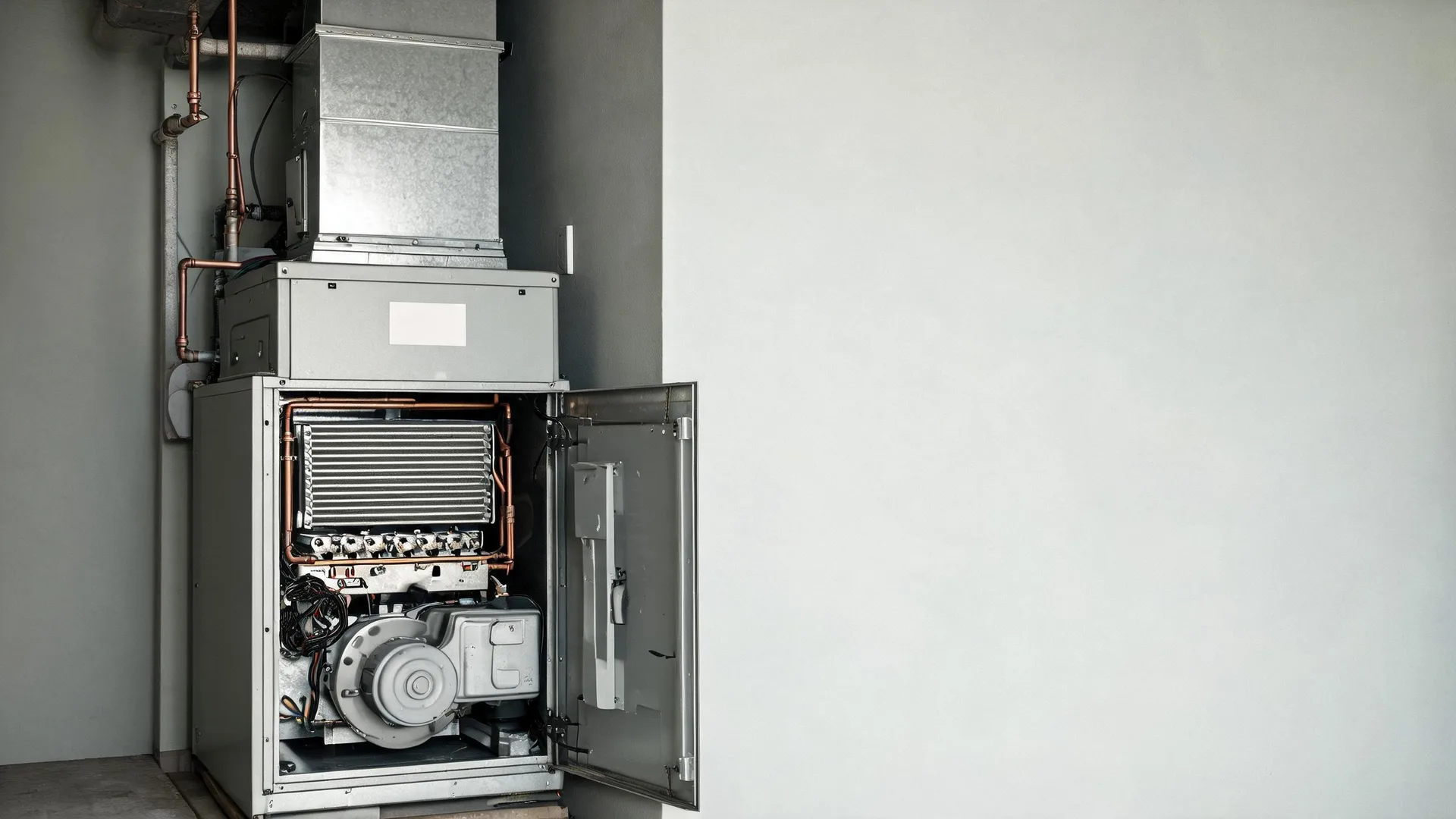
A dirty filter chokes airflow across the whole system. The evaporator coil needs steady airflow moving past it to stay warm enough to avoid icing over. Once ice builds on that coil, it blocks airflow further, and the system starts cooling worse while running longer to do it. A clean filter is the cheapest thing protecting the coil.
The drain decides where the water goes

The coil pulls moisture out of the air as it cools, and that water has to leave through a drain line and pan. When the line clogs with algae or dirt, the water backs up into the pan and finds the nearest way out, usually into the house below or around the unit. A technician checking that line during a tune-up is checking for a leak that hasn't happened yet.

Between visits, the filter is the one thing worth checking yourself. Pull it out, hold it up to a light, and if you can't see through it, swap it in. A dirty filter is the most common reason a system runs long and cools poorly, and it's the easiest thing to fix before it becomes a service call. Outside, keep leaves and clippings away from the unit's cabinet so air can pull through the coil the way it's supposed to. Inside, listen for anything new: a rattle, a hum that wasn't there before, a musty smell when the system kicks on. None of that is something to fix yourself. It's just worth mentioning to a technician at the next check, because a sound that shows up between visits is usually the first sign of whatever they'd otherwise catch later.

A tune-up is a fixed set of checks, not a once-over. A technician measures the refrigerant charge against what the system calls for, because too little or too much makes the compressor work harder than it should. They check the electrical connections and the capacitor, since a weak capacitor is one of the more common reasons a compressor struggles to start. The condenser coil gets cleaned so it can shed heat the way it's built to. They test the contactor, check the blower, and confirm the thermostat is actually telling the system what the dial says. None of this is guesswork. It's the same list every time, because those are the parts that wear and the failures that follow from them.