






An outdoor air conditioning condenser unit on a concrete pad next to the gray vinyl siding of a residential home.

AC Maintenance in San Rafael, CA

Tell us about the job

Takes about a minute. No obligation.

Tune-up, service, or cleaningCentral ACMarin County, CA
Step 1 of 2

What ZIP code is the job in?

Summers here top out at 71 degrees on average. An air conditioner sized for a hot climate barely has to work in San Rafael. That doesn't mean it sits unused, since it still comes on for the warmer stretches and still needs a once-a-year check even on light duty. The wear that shows up on a system like this tends to be about age or a part that sat too long without attention, not a compressor pushed hard for months straight. A yearly check catches that before it turns into a breakdown on the one week you actually need the thing to run.

71°F
the average summer afternoon it cools against
11 hail events
in ten years, and hail bends the fins on outdoor coils
122 wind events
in ten years, and wind drives debris into outdoor units
Isometric cutaway illustration of a house interior showing ducted HVAC piping, an indoor air handler unit, and an outdoor condenser with fan connected by a line, rendered in grey tones on a white background.
Your air conditioner works hardest from August through September.

NOAA nClimDiv, 1991–2020 normals

Marin County logged 122 damaging wind events between 2015 and 2024.

Wind like that can knock a unit's power out for a day, not wear its compressor down. One check a year still covers it.

Half the homes here were built by 1967, old enough to outlast an AC system

Half the homes here were built by 1967
Summer afternoons average 71°F
122 damaging wind events from 2015 to 2024

One check a year still costs the same no matter what electricity runs here, and in California that's 31.97 cents a kilowatt-hour, well above the national average. A system running clean draws less than one that's slipping, a weak capacitor or a dirty coil making the compressor work harder for the same cooling. That gap shows up on every bill until someone catches it. San Rafael doesn't ask much of an AC to begin with, so the yearly visit isn't about heavy use. It's about catching the small thing before it costs more to ignore than to fix.

Book the once-a-year check before San Rafael's AC season starts

Schedule the yearly check before the warm stretch sets in. An AC that barely has to work here still needs that one visit, and it's the cheapest way to catch a part that's been sitting unused since last year.

Find a contractor
A man in a dark cap and jacket and tan work pants, seen from behind, climbs porch steps toward an orange-brown front door while carrying a worn canvas tool bag.
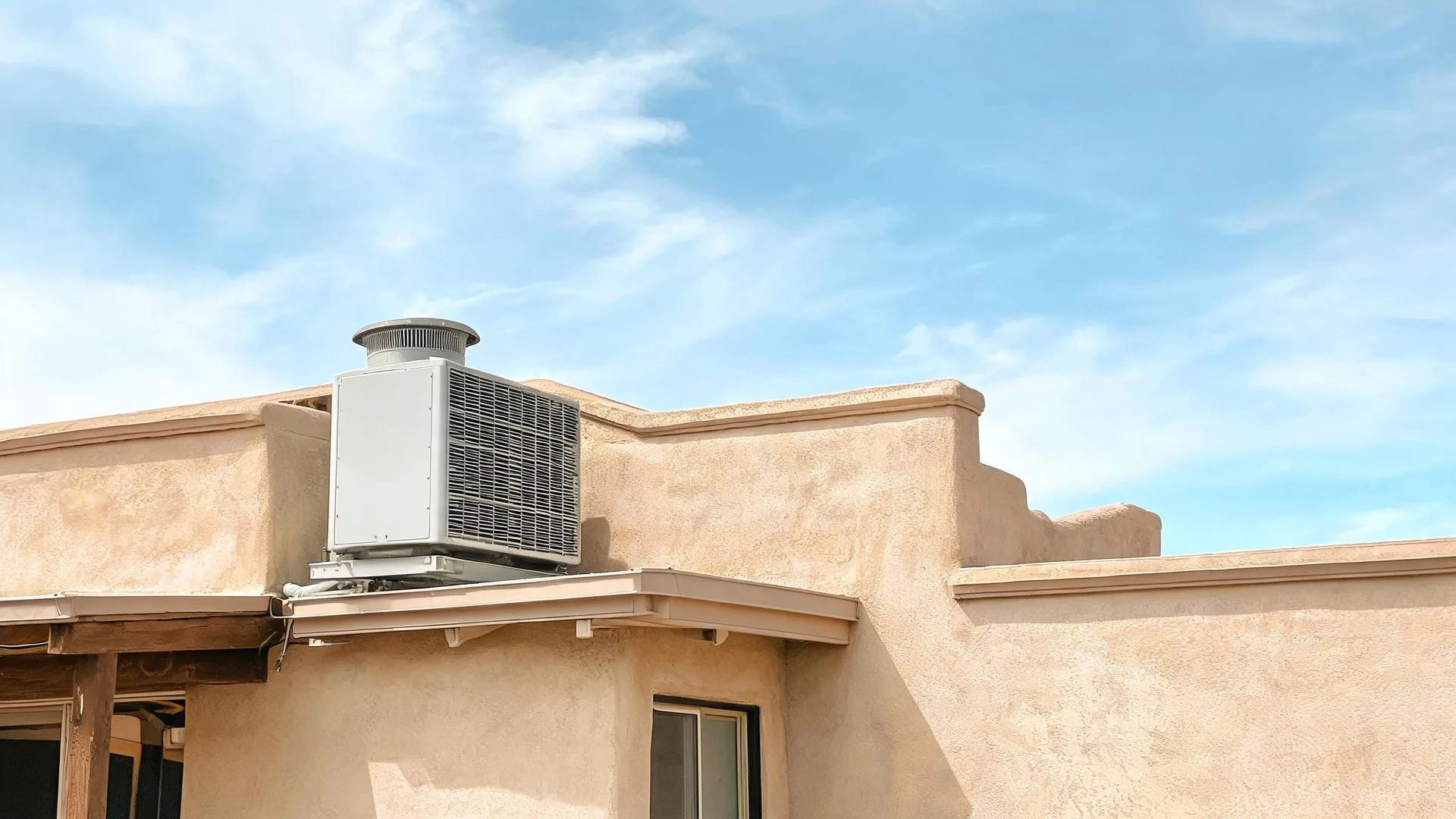
An outdoor air conditioning condenser unit mounted on a concrete pad beside a house, with electrical conduit running to a wall-mounted disconnect box.

If you don't know how old your system is, that's the job

A system that came with a house built that long ago has already outlived what most manufacturers rate it for. If you don't know how old your unit is, that uncertainty is the reason to get it checked yearly rather than wait for a strange noise or a warm afternoon with no cold air to tell you something's wrong. The yearly visit is also when a contractor can tell you roughly how much life is left in it, which matters more in a house where nobody's sure what year it went in.

The refrigerant charge drifts without anyone noticing

A system can run low on refrigerant from a slow leak that never announces itself. There's no smell, no sound, just a coil that starts icing over or a house that takes longer to cool. By the time someone feels it, the compressor has been working harder for weeks to make up the difference.
A missed check means a small part fails somewhere worse

A capacitor or contactor that's starting to go usually shows some sign first, a hard start, a hum before the fan kicks in. Caught during a check, it's a part swapped on the spot. Missed, it's the same part failing outright, and it picks its own moment to do it.

A quick visit means someone glances at the outside unit, checks that air is blowing cold, and leaves. A thorough one means the panels come off. The contractor checks refrigerant pressure against what the system is supposed to run, not just whether air feels cold at the vent. They pull the capacitor and test it under load instead of eyeballing it, because a capacitor can look fine and still be weak. The condenser coil gets washed, not just looked at, since a coil caked with debris makes the compressor work harder even when nothing seems wrong. Electrical connections get tightened, since a loose one is what turns into a no-start call later. If nobody touches a gauge and nothing gets opened up, that's a look, not a tune-up.

A real tune-up follows a sequence, not a glance. The contractor checks the air filter first, since a clogged one starves airflow and makes every reading after it misleading. Refrigerant pressure gets tested against the system's own specs, high side and low side both, because the number only means something in comparison. The blower wheel gets checked for dust buildup, which cuts airflow the same way a dirty filter does but doesn't get fixed by swapping a filter. Condensate drain lines get checked too, since a clogged one backs up and can shut the whole system down on a safety switch before anything else even fails. Thermostat calibration is worth a look as well, since a thermostat reading wrong makes a perfectly healthy system seem like it's underperforming.