







Aerial view of a gray central air conditioning condenser unit on a concrete pad next to a house with vinyl siding.

AC Maintenance in Santa Maria, CA

Tell us about the job

Takes about a minute. No obligation.

Tune-up, service, or cleaningCentral ACSanta Barbara County, CA
Step 1 of 2

What ZIP code is the job in?

Electricity in Santa Barbara County averaged 34.49 cents per kilowatt-hour in 2025, higher than in most US counties. A dirty coil or a weak capacitor makes the compressor work harder to do the same job, and every extra minute it runs here costs more than it would almost anywhere else. Your AC in Santa Maria doesn't run as many hours a year as it would in a hotter place, but that's not where the cost comes from. It comes from what happens during the hours it does run. A unit that's falling behind on maintenance burns more power per hour, and at this rate, that difference shows up fast.

3 months
July through September, your air conditioner is on duty
81°F
the average summer afternoon it cools against
32 wind events
in ten years, and wind drives debris into outdoor units
Isometric line illustration of a cutaway house showing interior rooms with furniture, ductwork leading to an indoor air handler, and an outdoor condenser unit connected by a line set.
Your air conditioner works hardest from July through September.

NOAA nClimDiv, 1991–2020 normals

A clogged filter starves the system of airflow, so the coil behind it can start icing over instead of cooling.

Once ice builds on the coil, the compressor keeps running but barely moves any heat out of the house.

Three months of mild heat still asks a lot of a system nobody's checked

Cooling runs July through September
Summer afternoons average 81°F
32 damaging wind events from 2015 to 2024
July asks the most of a system that hasn't been checked since last yearCooling in Santa Maria runs July through September. Book the tune-up in June.

A system that only runs three months a year doesn't build up the wear a tune-up has to undo elsewhere. Less buildup means less to check, which is why this visit tends to go quick. That's still worth doing every year, not every few years. A loose connection or a weak capacitor sits there all winter without showing itself, since nothing is running to expose it. The first hot week in July is a bad time to find out. Catching it in spring means one visit instead of a system struggling through summer on a part that was already failing.

A unit running clean costs less to run here

A tune-up gets the coil clean and the capacitor tested before the compressor has to lean on them. That's what keeps the power bill from creeping up once the heat sets in.

Find a contractor
A man in a cap, gray long-sleeved shirt and tan work pants, seen from behind, carries a canvas tool bag up steps toward an orange front door of a gray clapboard house, with a potted shrub to the right.
An outdoor air conditioning condenser unit mounted on a concrete pad surrounded by gravel, photographed against a partly cloudy blue sky.

Small problems don't stay small. They wait for the hot week to show up

Skip maintenance long enough and small problems sit there instead of getting caught. A refrigerant leak is a good example. It starts small, the system still cools, and nobody notices because nothing looks different from the outside. It keeps leaking anyway, a little more each month, until the compressor is running with barely enough refrigerant to move heat at all. A failing capacitor behaves the same way. It doesn't give out all at once. It weakens, and the compressor starts leaning harder on the motor to make up for it, until the day it can't start the system at all. None of this shows up as a sound or a smell early on. The house still feels cool, so there's no reason to think anything's wrong, right up until the week the compressor finally has to work full out and the weak part gives out under it.

What the gauges show that the thermostat doesn't

A tech checks refrigerant pressure against what the system is supposed to run at, not just whether the house feels cool. A unit can still bring the temperature down while running low on charge or fighting a restriction, and the thermostat has no way to tell you that. The pressures do.

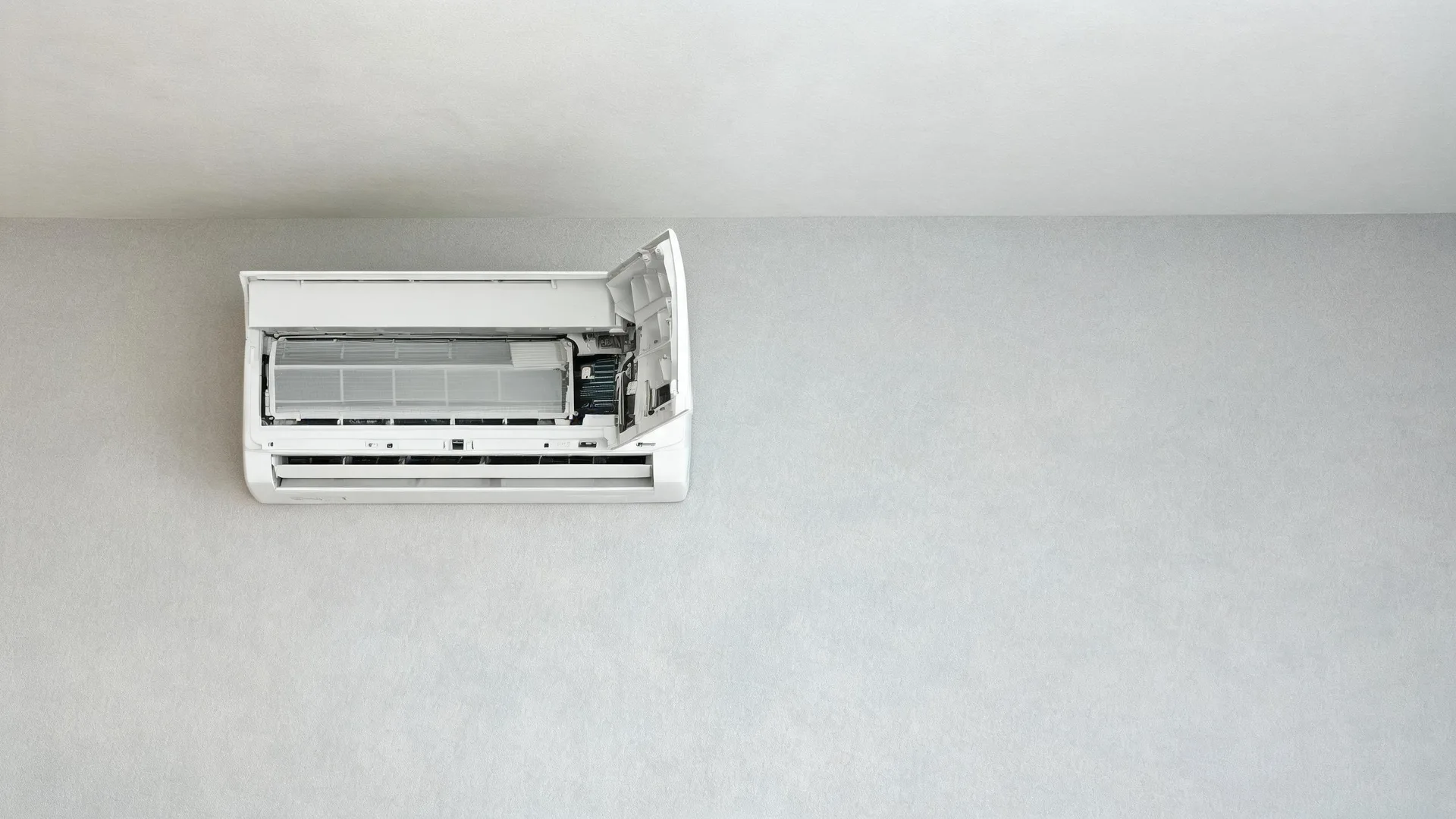
What this means for a system nobody's opened up

A loose electrical connection, a capacitor reading weak, a blower wheel caked with dust: none of these show up as a change in comfort until they fail outright. A tune-up catches them while they're still a five-minute fix, before the compressor has spent a season running harder because of them.

Overhead view of an air conditioning condenser unit on a concrete pad next to a house with asphalt shingle roofing and vinyl siding.

Book your AC tune-up in June, before homes here start needing cooling in July.

  1. Jan
  2. Feb
  3. Mar
  4. Apr
  5. May
  6. Jun
  7. Jul
  8. Aug
  9. Sep
  10. Oct
  11. Nov
  12. Dec

A tune-up checks the refrigerant charge, cleans the coils, tests the capacitor and tightens the electrical connections.

A proper tune-up starts outside, at the condenser. The coil gets cleaned so it can actually shed heat, and the fan blades get checked since a bent one throws off airflow for the whole unit. Refrigerant pressure gets measured against the number the system is built to run at, not guessed at. The capacitor gets tested under load, because a capacitor can measure fine sitting still and still fail the moment the compressor asks something of it. Electrical connections get tightened, since a loose one generates heat right at the connection and that heat damages whatever it touches. Inside, the blower wheel gets checked for dust buildup and the filter gets inspected, because restricted airflow across the indoor coil is how coils end up icing over. None of this takes long when a system has been looked at regularly. It takes longer, and finds more, when it hasn't.