Two months of real work a year
Air conditioners in Nevada County run from July through August, with afternoon highs averaging around 82°F. The rest of the year the compressor and coil just sit there.

Takes about a minute. No obligation.
Air conditioners in Nevada County run from July through August, with afternoon highs averaging around 82°F. The rest of the year the compressor and coil just sit there.
A coil that sits unused still collects dust. Connections still loosen. Refrigerant can still seep out slowly over a winter spent off. None of that shows up until the first hot day, when the system has to work and finds out it can't.

NOAA nClimDiv, 1991–2020 normals
Half the homes in Nevada County were built in 1983 or later.
A system that age is worth keeping running well, and a yearly check catches what the idle months do to it.

A quick visit gets you a filter check and a glance at the thermostat. A thorough one gets the refrigerant charge checked against what the system actually calls for, not just whether the lines feel cold. Someone should be checking capacitor readings, not just looking for bulging or leaking. The condenser coil gets washed out, not just looked at through the fins. Electrical connections get tightened, since a loose one builds heat and eventually fails right when the system is working hardest. The drain line gets flushed too, because a clogged one backs up and causes water damage long before anyone notices the air isn't cold anymore.
The system sits idle most of the year, then has to work in July with no warm-up. A check before then catches a loosening connection or a slow refrigerant leak while the system is still off, not on the afternoon it has to run.
Find a contractor
A dirty filter chokes airflow before anything else does. The coil behind it depends on a steady pull of air to give up its heat, and when the filter is clogged that coil can ice over even on a hot afternoon. Ice on the coil means no cooling gets to the house at all. The outdoor coil has its own version of the same problem. Dust and grass clippings settle into the fins between seasons, and once it's coated the system can't dump heat the way it needs to, so it runs longer to do the same job. The drain line is the part nobody thinks about until it fails. Condensation has to go somewhere, and the path is a small line that algae and dirt can block from the inside. A blocked drain doesn't make noise or change the air temperature. It just backs up quietly until water shows up somewhere it shouldn't. None of this announces itself early. It shows up as a system that runs longer, cools less, or leaks water, and by then the fix is bigger than it needed to be.
A tune-up checks the temperature drop across the evaporator coil and the pressure of the refrigerant in the lines. Both have a correct range for that system. A unit can seem to run fine and still fall outside it, cooling the house but costing more to do it, or putting strain on the compressor that only shows up as a failure later.
A capacitor can look perfectly fine and still be weak enough to make the compressor struggle to start. The only way to know is to test it with a meter and compare the reading to what the part is rated for. The same goes for a motor running hotter than it should, or amp draw creeping up on a compressor that sounds no different than it did last year.
A tune-up checks the refrigerant charge, cleans the coils, tests the capacitor and tightens the electrical connections.
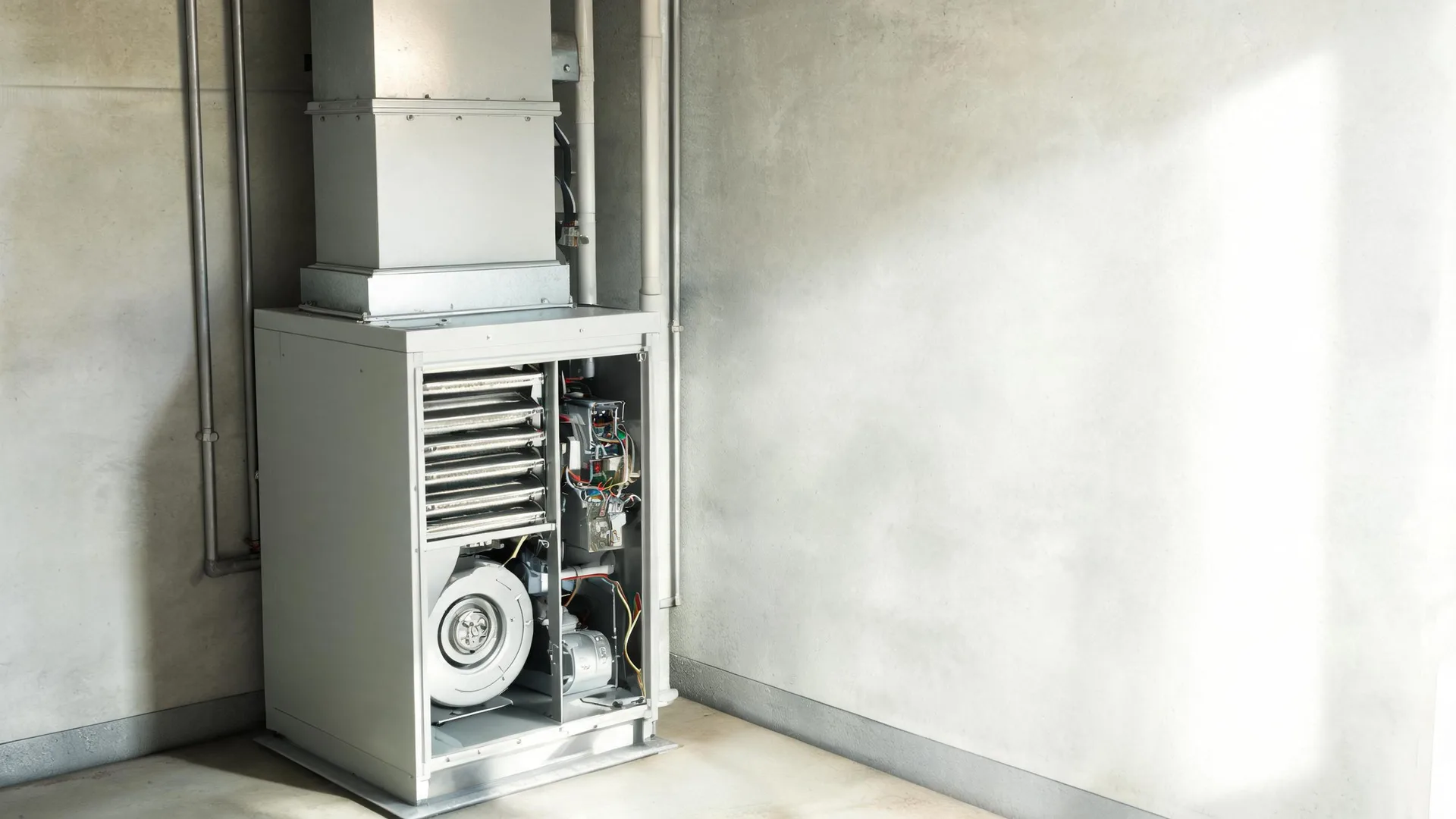
A tune-up also means someone opens the cabinet and looks at things a homeowner never sees. The blower wheel can cake up with dust over time, and a dirty one moves less air no matter how clean the filter is. Belts aren't part of this, most systems built in the last few decades drive the blower directly off the motor, but that motor still needs its bearings checked, because a dry bearing runs hotter and louder before it finally seizes. Wiring gets a look too, not just the big connections but the low-voltage thermostat wire, since a loose strand there causes a system to short cycle or ignore a call for cooling entirely. None of this fixes something that's broken. It finds the thing that's about to be.