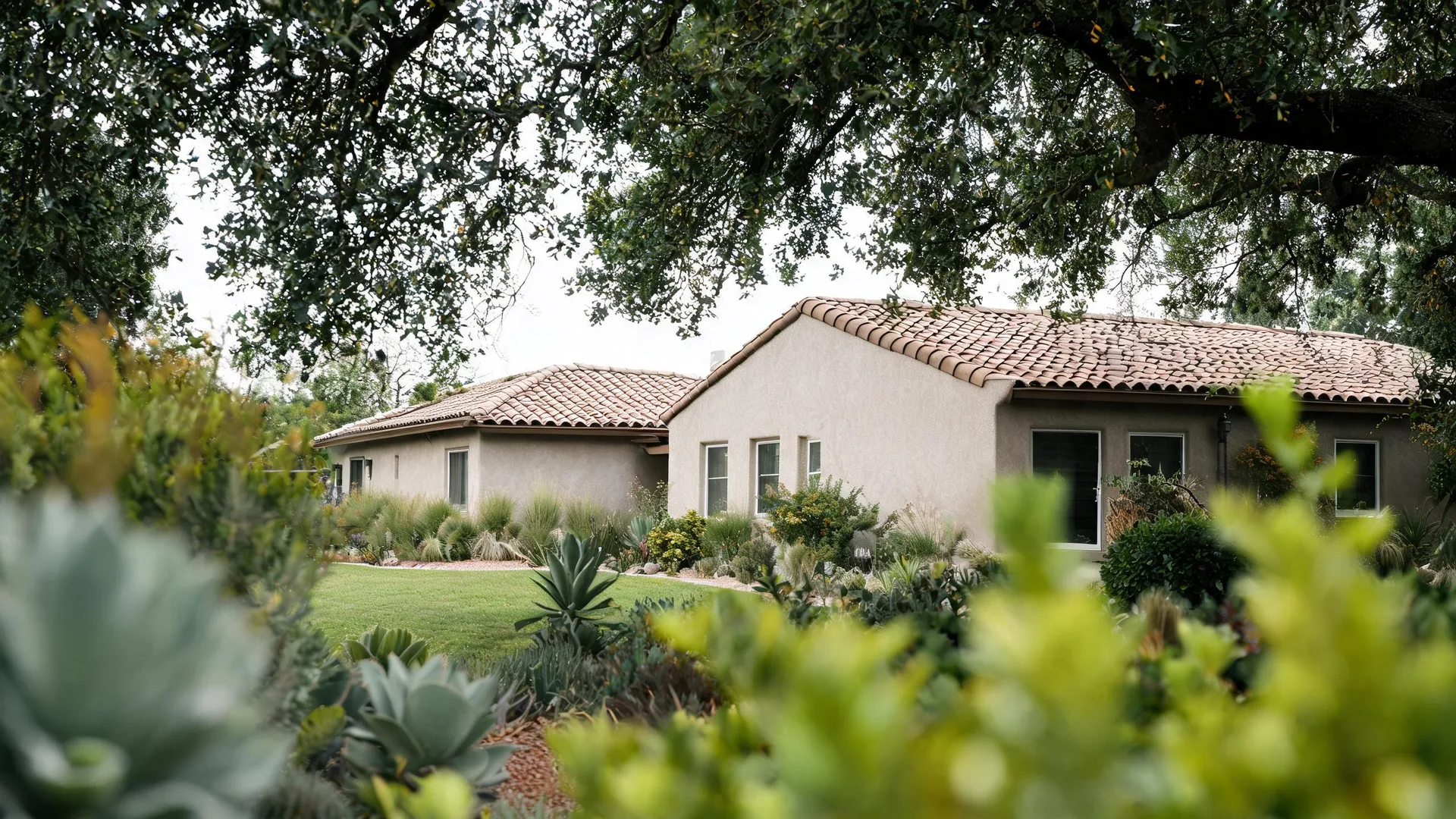





A single-story stucco house with a clay tile roof, framed by overhanging oak branches and foreground agave and shrub plantings beside a lawn.

AC Maintenance in Ukiah, CA

Tell us about the job

Takes about a minute. No obligation.

Tune-up, service, or cleaningCentral ACMendocino County, CA
Step 1 of 2

What ZIP code is the job in?

AC in Ukiah only has to carry the house for July and August. That is not a long season, but both months ask the system to work hard from the first day. June is the month to get the check done, before the heat shows up and before any weak part gets tested by it. A technician can catch a failing capacitor or a low charge while the system is still running easy. Wait until July and you find out about that problem on the day you need the system most.

2 months
July through August, your air conditioner is on duty
81°F
the average summer afternoon it cools against
59 wind events
in ten years, and wind drives debris into outdoor units
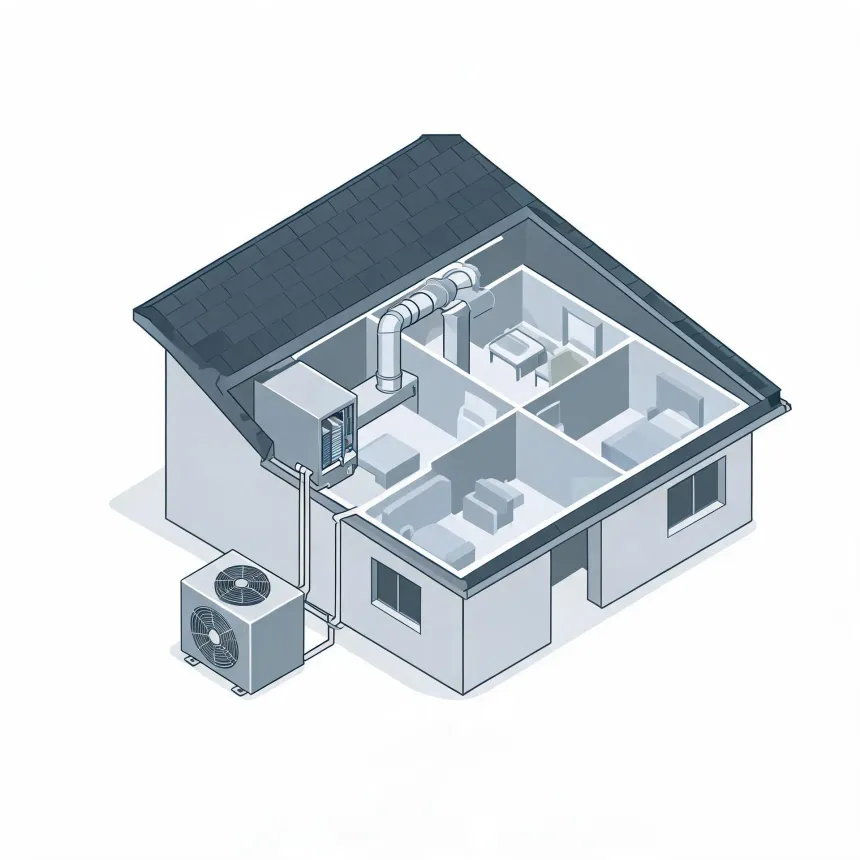
Isometric cutaway illustration of a single-story house showing interior rooms, ceiling ductwork connected to an indoor air handler, and an outdoor condenser unit beside the exterior wall.
Your air conditioner works hardest from July through August.

NOAA nClimDiv, 1991–2020 normals

Ukiah asks for cooling about two months a year, with afternoon highs near 81 in summer.

A system working that short a season still has parts that age. A yearly check catches that before July does.

One check a year covers it here

Half the homes here were built by 1977
Cooling runs July through August
Summer afternoons average 81°F

Skip the yearly check and the first thing to go is usually the condenser coil, caked with dust until it can't shed heat the way it should. The system still runs, but it runs longer to do the same job, and the compressor behind it works harder on every cycle. A dirty filter does similar damage from the other end, starving the system of airflow until ice forms on the coil instead of condensation. Refrigerant charge drifts low over time too, usually from a slow leak nobody notices because the system keeps running, just worse. None of this shows up as a dead system right away. It shows up as a compressor running harder than it should, for longer than it should, until one day it doesn't start at all.

One check now, before August needs it

Two months of work a year doesn't wear a system out on its own. What catches up with it is a season nobody checked on. Book the check before July and find out now if something needs attention, not on the first hot afternoon.

Find a contractor
A man in a cap, worn gray shirt and brown work pants, seen from behind, carries a leather tool bag up steps toward an orange front door beside a potted shrub.
An outdoor residential air conditioning condenser unit mounted on a concrete pad, surrounded by gravel with a blue sky in the background.

What the gauges catch that the thermostat can't

A gauge set on the refrigerant lines tells a technician the charge before anything else does. Low refrigerant doesn't announce itself. The system keeps blowing air, just not as cold, and most people don't notice until the coil ices over. Amp readings on the compressor show the same kind of thing early. A motor drawing more current than it should is already working harder than it should, and that shows up on a meter long before the system won't start. A technician also checks the capacitor. A weak one lets the compressor struggle on startup without ever fully failing, until the day it does. None of this is visible from the thermostat. It only shows up when someone opens the cabinet and tests it.

Opening the panel versus looking at it

A quick visit checks that the system runs and the air feels cold. A thorough one pulls the panel off the condenser and the blower compartment, looks at the wiring for scorch marks, and checks the contactor for pitting before it fails and takes the compressor with it. One of these finds a problem while it's still small. The other finds out the system turns on.

The reading that gets skipped

Checking refrigerant charge means connecting gauges to the lines and comparing the reading against what the system is supposed to run. That takes time to do right. A faster visit sometimes just asks whether the air coming out of the vents feels cold enough, which can feel fine even when the charge is low. A system can run for a long time on a partial charge before it stops cooling the way it should.

An outdoor air conditioning condenser unit mounted on a concrete pad next to a blue-sided residential house at sunset.

Book your AC tune-up in June, before homes here start needing cooling in July.

  1. Jan
  2. Feb
  3. Mar
  4. Apr
  5. May
  6. Jun
  7. Jul
  8. Aug
  9. Sep
  10. Oct
  11. Nov
  12. Dec

A tune-up checks the refrigerant charge, cleans the coils, tests the capacitor and tightens the electrical connections.

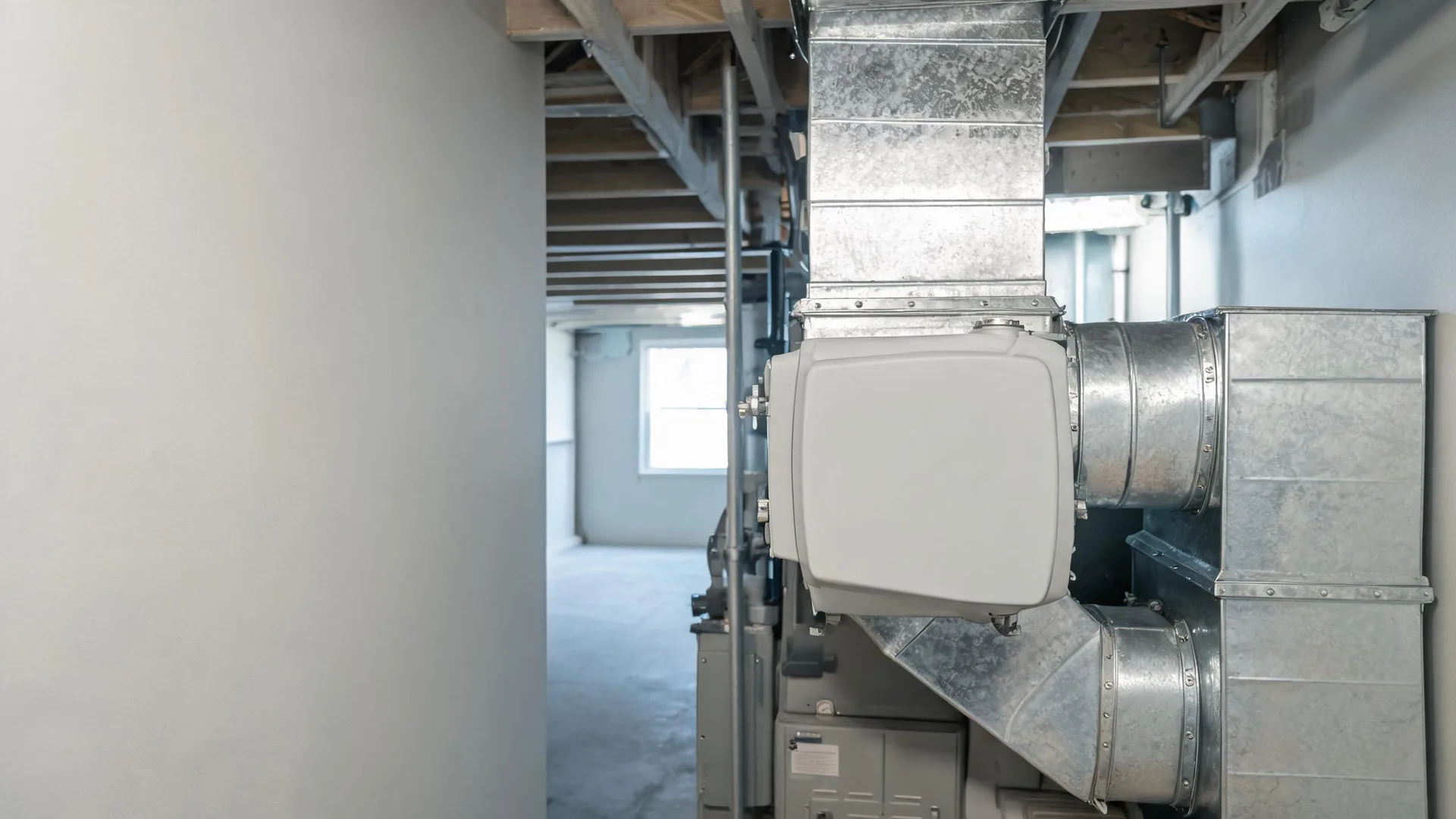
A real tune-up starts outside at the condenser. The technician cuts power, pulls the panel, and washes the coil clean so it can shed heat again. Inside, the blower compartment gets checked too, since a dirty blower wheel or a clogged filter cuts airflow across the evaporator coil the same way a dirty condenser cuts it outside. The drain line gets checked and cleared, because a clogged one backs up and spills water where it shouldn't. Belts don't factor in on most home systems since the motors connect direct, but bearings and electrical connections still get looked over for wear. Every part of this matters more in the weeks before the system has to run flat out than it does once summer is already underway.