
41°F average winter low
That's a small gap to close between outdoor and indoor air. The compressor and the outdoor coil spend most of winter working well within what they're built for.
Your new heat pump project goes to an installer who works in Alameda County.
Request a proA heat pump in Oakland typically lasts 15 to 20 years, often longer than you'd see inland. The mild winters here mean the system rarely has to work hard to pull heat out of cold outdoor air, and the warm, dry summers don't put much strain on it either. Heat pumps wear out mainly from running at their limits, long defrost cycles in freezing weather, long stretches of high heat and humidity, and Oakland sees little of either. What usually ends one here isn't the compressor giving out from overwork. It's age catching up with the refrigerant lines, the controls, or a coil that's been outside for two decades. If your system came with the house, it's worth finding out how old it actually is. A unit past 15 years can still run fine day to day and still be due for a look, since the parts most likely to fail don't always give much warning first.
Winter nights average 41°F
Winter nights here average 41°F. Your heat pump never has to pull heat out of truly cold air, which is the hardest work it does.
Heat runs November through April
Heat runs November through April, about six months of the year. That's a long stretch of light duty, not six months of strain.
Cooling runs July through September
Cooling runs July through September, just three months. Short, mild summers mean the compressor spends most of the year resting.
NOAA nClimDiv 1991-2020
Fog rolling in off the bay keeps summer afternoons from ever getting brutal, and that matters for a heat pump, because the compressor works hardest when it has to bridge a big gap between outdoor and indoor temperature. In Oakland that gap stays small nearly all year. The unit cycles on, moves a modest amount of heat, and shuts off, instead of running flat out for hours the way it might in a place with real heat waves or hard freezes. Less strain on the compressor and the outdoor coil over a given year adds up over a decade or two. It's a quieter working life for the equipment, and it shows in how long the system keeps running before anything major fails.
None of that makes the unit immune to age. Refrigerant lines corrode, electrical connections loosen, and the outdoor coil collects salt air and road grit whether the compressor is working hard or barely at all. A heat pump near the coast gets more of that salt exposure than one further inland, and it can affect the coil and cabinet over the years regardless of how mild the load is. Maintenance still matters as much as it would anywhere. A system that's coasted through easy winters and mild summers for fifteen years can still go down from a neglected filter or a refrigerant leak nobody caught, so the mild climate buys you time, not a pass on upkeep.




That's a small gap to close between outdoor and indoor air. The compressor and the outdoor coil spend most of winter working well within what they're built for.
A heat pump that came with the house or was put in years back is worth a look. A local contractor who services this equipment can tell you where yours stands.

A heat pump that never has to work hard tends to go quiet, not loud. If yours is nearing 15 years and still running fine, that fits what's normal here, not a sign something's about to fail. What usually brings an Oakland heat pump down isn't age by itself. It's the refrigerant charge slipping low, a capacitor weakening, or the outdoor coil getting coated with the dust and leaves that build up over a few seasons outside.
Power here costs more than almost anywhere else in the country, so a heat pump that's lost a few points of efficiency shows up on your bill before it shows up as a breakdown. That's worth catching early. A local contractor who works on heat pumps in this kind of weather all year knows which parts tend to go first in a system that's rarely pushed to its limits, and can tell you whether what you're seeing is normal wear or something worth fixing now.

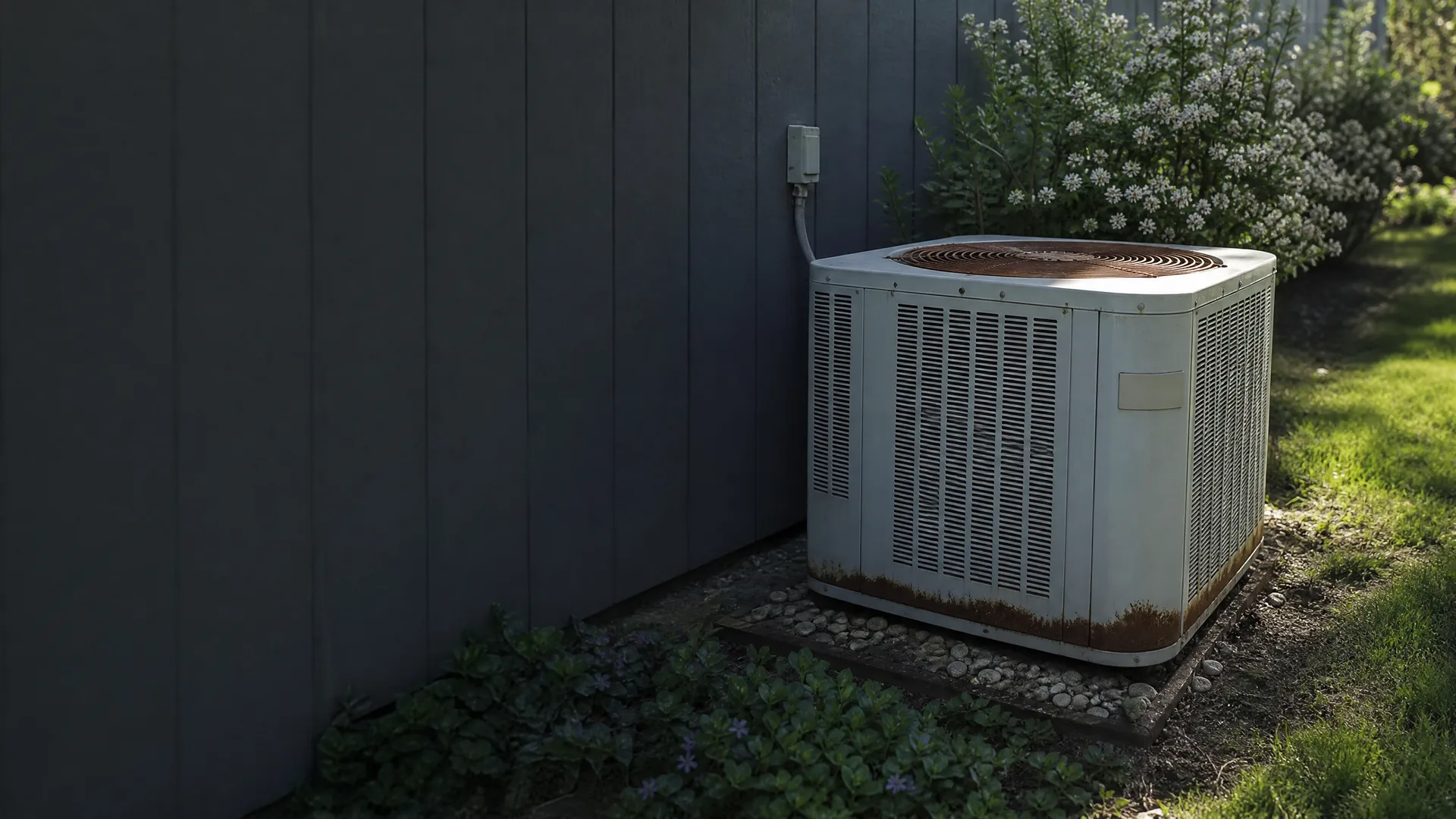
You're out in the side yard in April, coiling up the hose after you got the first weeds pulled, and you stop by the unit on your way back in. Rust has worked along the base of the cabinet, a thin orange line where the metal meets the pad, and one of the panel screws is gone. It's been there through how many winters you've lost count of, and it still kept the house even enough that you never thought about it. You crouch down and look closer at the rust, not sure if it's just surface or if it's gotten into the base pan. You straighten up, leave it for now, and go back inside to look up who around here actually works on these.
The pro who gets in touch is licensed in California and works in Alameda County.
You only hire the pro if you want to.
Alameda County winters rarely ask much of a heat pump. Nights sit in the low 40s most of the season, so the system is pulling heat out of air that isn't far from room temperature. The compressor runs, but it isn't straining to bridge a big gap. Over years, that's less wear on the parts that usually fail first, the compressor and the outdoor coil. A heat pump run this way can hit 20 years and still heat the house fine on a January morning. It's not luck. It's the gap it never had to close.
Move that same heat pump inland, or to a place with real winter cold, and the story changes. Nights near freezing or below mean the compressor is pulling heat from air that has almost none to give up, and it runs longer and harder to do it. Defrost cycles kick in more often, which adds wear of its own. Summers there often run hotter too, so the unit gets pushed from both directions instead of one. The same equipment, the same manufacturer, often lands closer to 12 to 15 years under that kind of load.



The cabinet is free of grime, the gravel bed is clear, and the disconnect box is easy to reach. Air moves through the coil the way it's supposed to, and a unit kept like this is doing what Oakland's mild weather already makes easy on it.

Grime like this coats the coil fins and makes the system pull harder to move the same air, even on a year the weather never asked much of it. Left alone, it's the kind of thing that turns an easy Oakland winter into added wear anyway.

Mounted off the ground, disconnect box easy to reach, fins free of dirt. Air moves through the coil the way it was designed to, and the compressor isn't fighting anything extra on top of what Oakland's mild air already asks of it.

Dirt packed into the fins and base makes the system pull harder to move the same air. A unit left like this works against buildup Oakland's weather never caused, and that's what shortens a lifespan the climate here was never going to.
Your heat pump isn't working hard here, but every hour it runs still shows up on the bill at close to 38 cents a kilowatt-hour. A system that's past 15 years and losing efficiency costs you more to run at that rate than a newer one would, even in a climate this easy on equipment.
EIA-861 2025


A heat pump installed in Oakland or anywhere in Alameda County has an easier life than most, and that shows up in how long it runs. Mild winters mean the compressor almost never strains to pull heat from cold air, and the fog that keeps summer afternoons comfortable spares it the other kind of hard work. Fifteen to twenty years is the range this climate supports, and plenty of units reach the far end of that without trouble.
What ends a heat pump's life here usually isn't the weather. It's what happens around the cabinet while nobody's looking. Rust working up from the base, a disconnect box packed with debris, a coil caked with dirt so air can't move through it the way it should. None of that comes from winter nights in the low 40s. It comes from a unit that's been left alone too long.
That's why the calendar only tells you part of the story. A system past 15 years that's clean at the base, quiet when it runs and easy to get to is likely still doing fine. One that's newer but rusting or neglected may be closer to trouble than its age suggests. And every year it keeps running, it's billed at some of the highest power rates in the country, so a system losing efficiency costs you even in a climate this forgiving. Knowing the install date and looking at the unit itself tells you more than either fact alone.


Get your heat pump to the right pro
A licensed pro who works in Alameda County gets your request.