
How long heat pumps last in California
After this form, you can stop searching for a heat pump pro.
How long do heat pumps last in California?
Your heat pump runs year round here since it covers both heating and cooling, and with power costs what they are in California, you want to know what kind of life to expect before you're stuck deciding between another repair or a full replacement.
15 to 20 years, often toward the longer end
Most heat pumps last 15 to 20 years. California tends to land at the upper end of that range. The mild summers here mean the compressor isn't working against heavy heat load the way it would in a hotter state, and that's less strain on the system over its life. Winters are light enough in most of the state that the heat pump isn't running flat out for months either. The bigger factor is usually how much the system gets used for both jobs, heating and cooling, year round, since a unit that runs most months works harder over its lifetime than one that sits idle half the year. When it does fail, a new installation is the point where you can match the equipment to how your home actually uses it.




How Your Heat Pump Wears
- A heat pump moves heat instead of burning fuel, so the compressor cycles on and off far more often than a furnace burner does.
- Running it for both heating and cooling all year puts more total hours on the compressor than a system that only handles summer.
- The reversing valve switches the refrigerant flow between heating and cooling modes, and a stuck or worn valve is a common failure point on older units.
- Outdoor coils here collect dust and debris year round since there's no long winter shutdown to let them sit idle.
- Mild winters mean the compressor rarely has to work against extreme cold, which spares it the strain that shortens life in harsher climates.
- A unit that short cycles, turning on and off in quick bursts, wears out its compressor well before its expected years are up.
A furnace burns gas in short bursts, but a heat pump's compressor is doing the work all year, since it's the thing that makes both your warm air in winter and your cool air in summer. That's more total run hours than a system that only turns on for half the year. Every time your thermostat calls for heating or cooling, the reversing valve switches the direction refrigerant flows through the system. That valve takes a lot of cycles over the years, and when it sticks or wears out, the unit can get stuck in one mode or stop switching cleanly. The outdoor coil sits outside through every season here, with no winter shutdown to give it a break, so dust and debris build up on it year round and someone has to keep it clear for the system to work as it should. California's winters work in the compressor's favor. It doesn't have to fight hard freezes the way units in colder states do, and that lighter load over winter is part of what lets a well kept heat pump here reach the upper end of its expected years. What cuts that short is short cycling, where the compressor kicks on, shuts off, and kicks on again in quick bursts instead of running a full cycle. That start-stop pattern stresses the compressor far more than steady running does, and it's one of the fastest ways a heat pump ends up replaced well before its time.


Send one request and you're done looking
A heat pump in California can run fifteen years, sometimes closer to twenty, if it's sized right for your house and installed correctly from the start. That last part matters more here than in most places, because your unit never really gets a break. It's your air conditioner in July and your furnace replacement in January, so a bad install shows up twice as fast. Finding someone who can size a heat pump properly, not just swap in whatever fits the old ductwork, usually means calling around, asking each contractor the same questions about load calculations and refrigerant lines, then trying to compare bids that are never written up the same way. That's the part you can hand off right now. You still have a system to get installed, and a decision about who does it, but you don't have to spend your evenings tracking down who's even available to quote it.
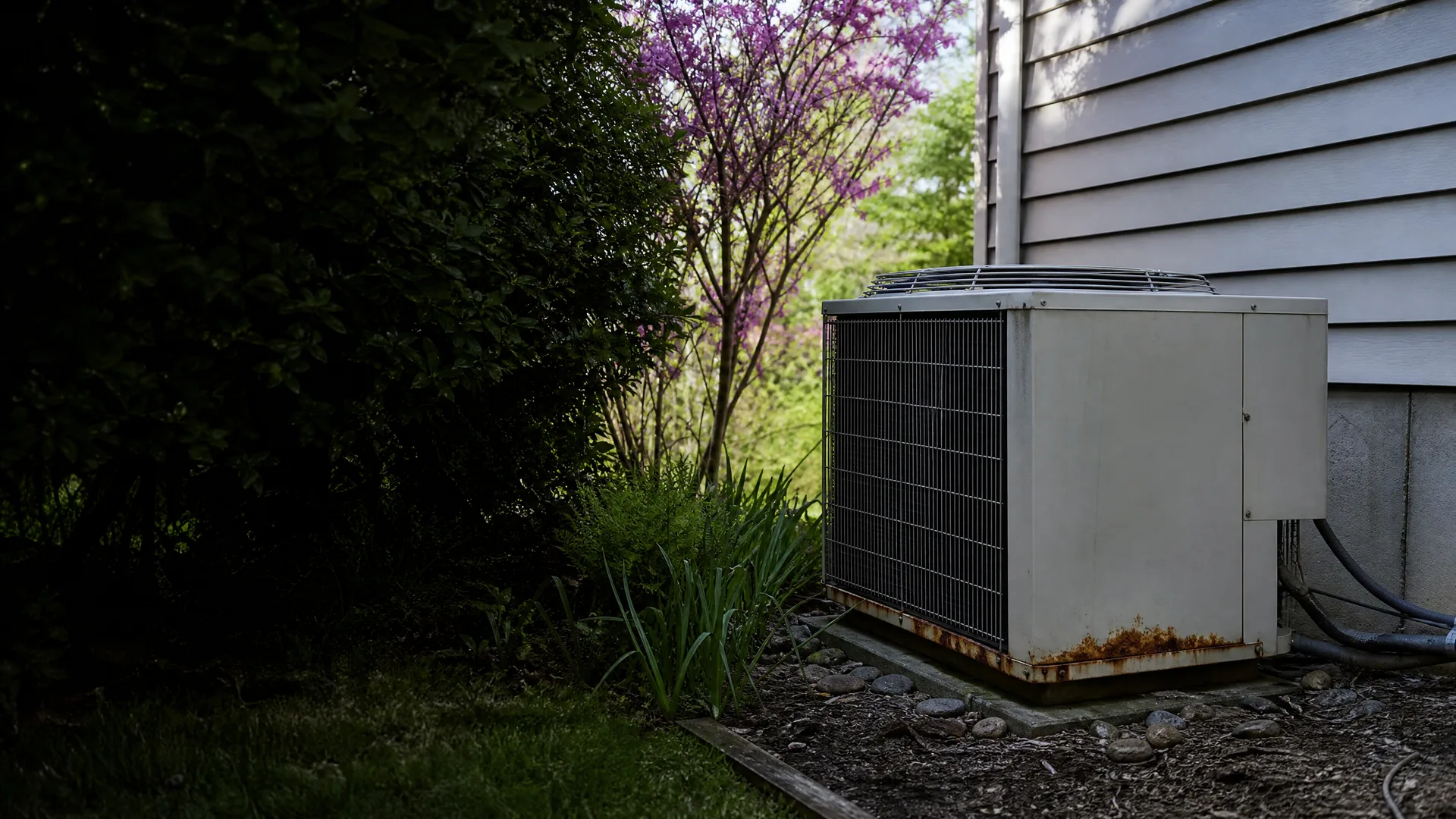
You're out in the side yard on a spring morning, coffee still in hand, and you crouch down to check the unit before the warm months really set in. The rust along the base catches your eye first, flaking a little where it meets the concrete pad. You press a finger near it and the metal gives slightly. It's been running steady for years, through winters and the long warm stretches both, and it shows. You think about the hum it's been making lately, a little rougher than before. Nothing's failed yet. But standing there in the morning light, you know this is the kind of thing that doesn't get better on its own.
Repair Again or Replace
Keep repairing
- A compressor replacement alone can run close to what a full system swap costs once labor and refrigerant are added in.
- Every repair buys time but the parts around the one just fixed are aging on the same schedule, running since the same install day.
- You already know this unit's quirks, so a technician coming back for another repair isn't starting from zero.
- Power bills stay tied to whatever efficiency the unit had on day one, which on an older heat pump is well below what's sold now.
- A refrigerant leak on an older system may call for a type that's being phased out and costs more to source.
- Each repair is a smaller bill up front, which matters if the budget this year doesn't stretch to a full install.
Replace now
- A new heat pump sized correctly for your house runs fewer total compressor hours to hit the same indoor temperature.
- Current units pull less power per degree of heating or cooling, which shows up directly on a California electric bill.
- You stop guessing which part fails next, since nothing on the new system has logged a single hour yet.
- Installation lets a contractor correct any sizing mistake from the original install, which is often why a unit struggled in the first place.
- A full system swap is the larger bill now, but it's one bill instead of a string of them over the next few years.
- Warranty coverage on a new unit resets, so the parts most likely to fail early are the ones covered.


A compressor that short cycles, kicking on and off in quick bursts instead of running a steady stretch, wears faster than one left to run its full cycle, and in a house with a mismatched system that's the pattern it settles into.
Sizing it to the house instead of just the square footage on a listing is what keeps the compressor running in those longer, steadier stretches for all the years it's supposed to.
Power costs 31.35 cents per kilowatt-hour statewide
At that rate, every hour your compressor labors to cover a loss, a bad capacitor, a dirty coil, shows up fast on the bill. A heat pump running efficiently costs you less here than almost anywhere it could go wrong.
EIA-861 2025 statewide residential average


A heat pump installed right and sized to your house in California should give you fifteen years, maybe twenty. The compressor is the part that decides that number, since it runs every month of the year here, not just a few. Rust at the base, a conduit pulling loose, short cycling instead of a full steady run: these are the signs telling you where your unit stands on that timeline, before the compressor itself gives out. Once you know what you're looking at, the next step is finding someone licensed to size the install correctly and put it in right, and that's usually where things stall. You end up searching for contractors, calling a few, explaining the same rust and the same noise each time, then sitting with quotes trying to tell which one actually matches what your house needs. Send the form and that part is no longer yours to carry. You still get the same answer this page gave you, just with someone qualified standing in front of your unit instead of you guessing at it alone.





Finding a pro stops being your job
Skip collecting and comparing quotes for the new heat pump.
Sending the form costs nothing.