






A single-story stucco house with a clay tile roof behind a lawn, framed by oak branches above and agave and shrubs in the blurred foreground.

Mini Split Installation in Fresno, CA

Tell us about the job

Takes about a minute. No obligation.

New system or replacementMini-splitFresno County, CA
Step 1 of 2

What ZIP code is the job in?

Electricity in Fresno County averaged 38.45 cents per kilowatt-hour in 2025, among the highest rates in the country. A mini-split that runs well matters more here than somewhere paying half that. The dry air works in its favor too. Low humidity means the system spends less effort wringing moisture out of the air, so it can focus on cooling it. That efficiency only shows up if the unit is sized and installed right. An oversized or poorly matched system burns through expensive power even on a short run, and a mismatch costs more per hour here than it would in a place paying less for electricity.

8 months
October through May, your system heats
4 months
June through September, it cools
32°F
the average winter night it heats against
86°F
the average summer afternoon it cools against
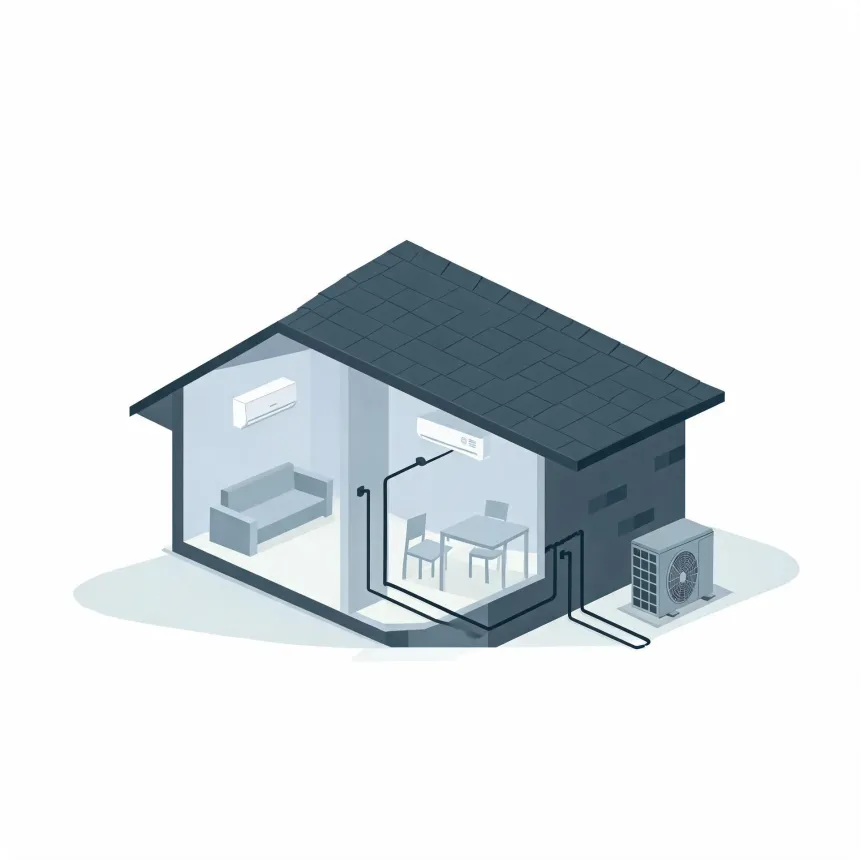
Isometric illustration of a cutaway single-story house showing two wall-mounted mini-split indoor units connected by line sets to an outdoor condenser beside the building, with a sofa, table and chairs inside.
Your system heats October through May and cools June through September.

NOAA nClimDiv, 1991–2020 normals

Cooling runs June through September here.

Get a mini-split installed before June and the first hot week isn't a scramble.

Gas heats most homes here, which decides what a mini-split is adding, not replacing

53.7% of homes heat with gas
Cooling runs June through September
Summer afternoons average 86°F
Fresno County sees its share of storms378 severe weather events hit the county between 2015 and 2024

Fresno County falls under climate zone 3B in the 2021 energy code, a warm zone with a long cooling season and a short, mild winter. Any new mini-split has to meet the federal minimum for that kind of system. For units built from 2023 on, that means pulling at least 14.3 Btu of cooling from every watt-hour of power it uses over the summer, and at least 7.5 Btu of heat per watt-hour over the winter. That standard doesn't bend for ductless systems specifically. It sets a floor on what can legally go into a home here, and a contractor sizing a system for this climate has to work within it.

Get a mini-split sized right for this house

Correct sizing is what makes the efficiency rating on the label mean anything. Get a quote and ask what size unit the job calls for and why.

Find a contractor
A man in a brown jacket, dark pants, boots and a cap walks up porch steps toward an open orange door, carrying a canvas tool bag beside a potted shrub.
A beige split-system air conditioner outdoor condenser unit mounted on metal wall brackets atop a stucco wall.

Sized for the room, not just the square footage

A mini-split is sized by matching its output to the heat gained by the space it covers, not by the square footage alone. The calculation weighs window area and direction, ceiling height, insulation, and how many walls face outside. Two rooms the same size can need different sized units if one has west-facing glass and the other doesn't. Oversizing feels like it should cool faster, but it does the opposite in practice. A unit that's too big blasts the room down to temperature and shuts off before it's had time to pull moisture out of the air, so the space feels cold and clammy rather than just cool. It also cycles on and off more, and every start draws a surge of power and puts wear on the compressor. Undersized, and the unit runs flat out and still can't keep up on the hottest days, which wears it down just as fast from the other direction. The compressor is built to run long, steady cycles at partial output. Sizing it right is what lets it actually do that.

Taking out the old unit is part of the job

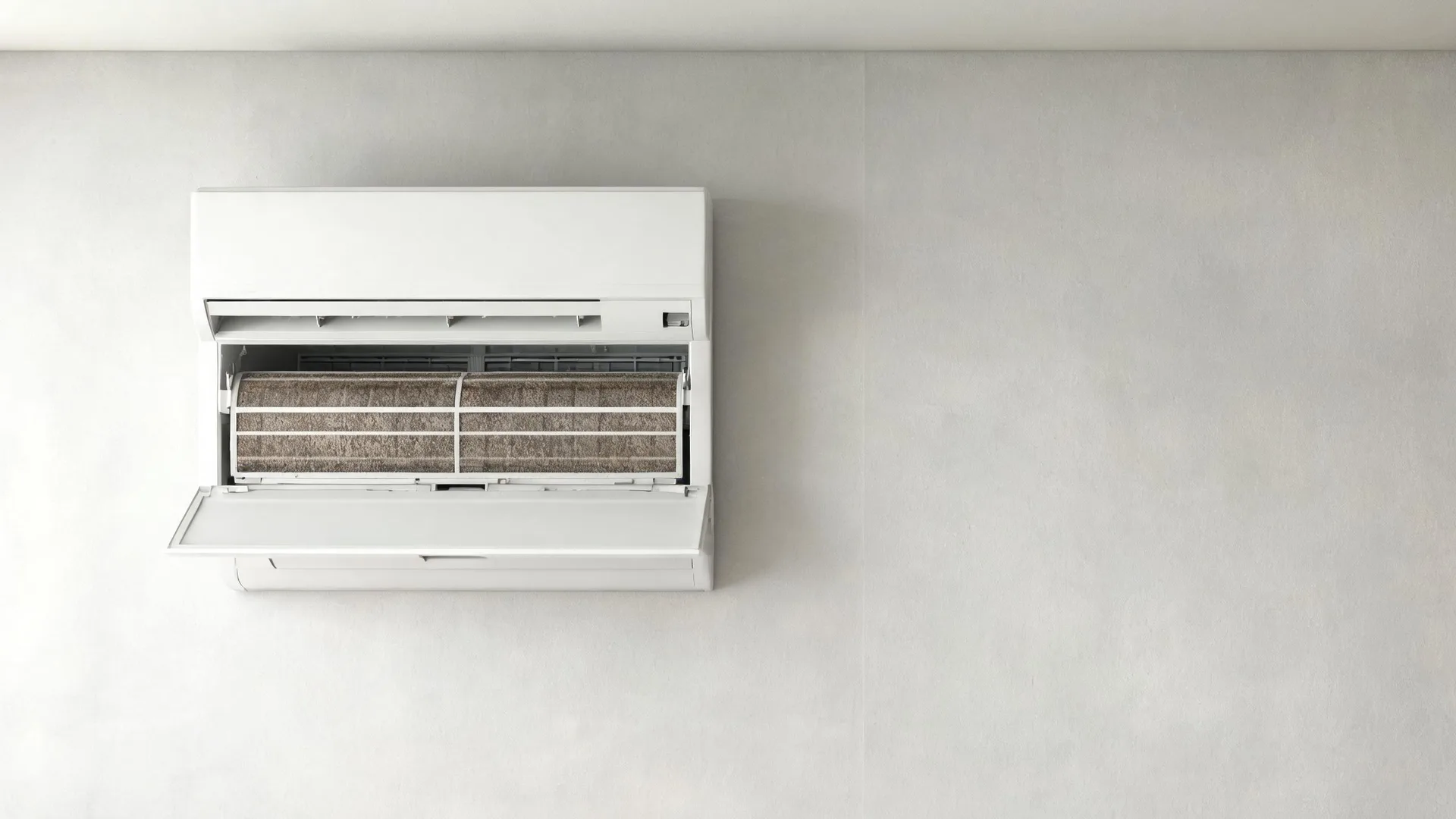
A window unit or old ductless system has to come out before the new one goes in, and that means capping or removing whatever line set, wiring or wall sleeve it used. A mini-split's lines and wiring rarely reuse what was there. The old refrigerant also has to be recovered properly rather than vented, since releasing it into the air is against the law.
The wall it leaves behind needs attention

Pulling an old unit out of a wall or window opening leaves a hole, old sealant, or a mounting bracket behind. That gap has to be patched and sealed well, or it becomes a path for outside air and moisture to get into the wall. A clean patch job also matters for where the new indoor unit gets mounted, since it needs solid, level backing to sit on.

That storm count matters most for where the outdoor unit ends up. It sits outside year round, so it needs to be clear of falling branches and anything that could blow into it. A contractor can also mount it up on a bracket instead of setting it right on the ground, which keeps it above standing water when storm drains back up. Mini-splits don't need gas, so if the power stays on, the indoor head keeps running even when a furnace's igniter can't get power. If the power goes out too, neither one runs, and that's worth asking the contractor about during the quote, since some systems can be set up with backup power and some can't.

Installation starts with running the line set, the refrigerant lines that connect the outdoor unit to the indoor head. That means drilling a hole through the wall, usually a few inches across, angled slightly so the outside end sits lower than the inside and water drains out instead of in. The lines get connected, the system gets evacuated with a vacuum pump to pull out air and moisture, then it's charged with refrigerant. A pressure test and a vacuum test both have to hold before the unit gets powered on, since a leak at this stage means the system loses its charge slowly over the following months. The indoor head gets mounted on a bracket, leveled, and connected to the condensate drain so water pulled out of the air has somewhere to go. Once it's running, a tech checks the temperature split between the air going in and the air coming out, which is how they confirm it's actually moving heat the way it's supposed to.